Hello from Kamonoya, where we run 11 whole-house rental lodgings around Lake Toya in Hokkaido. Most visitors to Lake Toya spend their time along the hot-spring town on the southern shore—but if you cross to the neighboring town of Sobetsu, which hugs the eastern shore, your trip gains a whole extra dimension. Sobetsu calls itself the “town of lake, volcano and hot springs,” and it forms one corner of the Toya-Usu UNESCO Global Geopark. It is well known for fruit picking (see our Sobetsu fruit-picking guide) and the spring Sobetsu Park plum grove, but there is far more packed into this small town. In this article we introduce Sobetsu from a local innkeeper’s point of view, focusing on the sights beyond the fruit and blossoms.
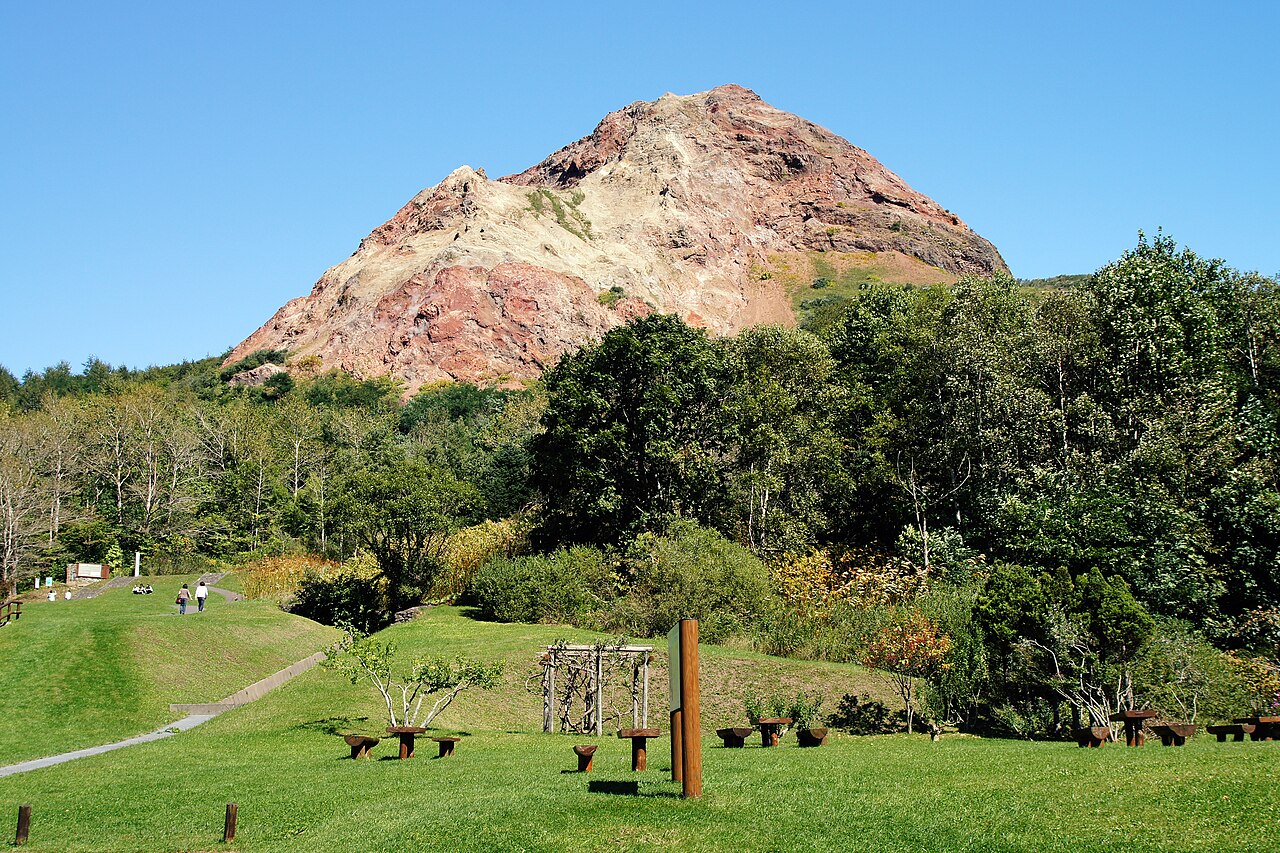
What kind of town is Sobetsu? A name that means “waterfall”
Sobetsu is a small town of about 2,000 people spreading along the eastern and southern shores of Lake Toya. Its name is said to come from the Ainu words “so-pet,” meaning “waterfall-river.” True to that name, the lake’s one and only outflow tumbles over the Sobetsu Falls, a drop of about 18 meters. Here the water leaving Lake Toya becomes the Sobetsu River and flows down into the Osaru River—this is the very waterfall that gave the town its name. The flow is powerful and impressive, so it makes a fine stop when driving along the lake’s eastern shore.
The town’s other face is that of a “volcano town.” To the south rises Showa-Shinzan, a lava dome created in 1944–45 when a wheat field was pushed upward—a formation rare even by world standards. Below we introduce the spots that only a town living side by side with a volcano could offer.
Showa-Shinzan Bear Ranch | meet Ezo brown bears from inside the “human cage”
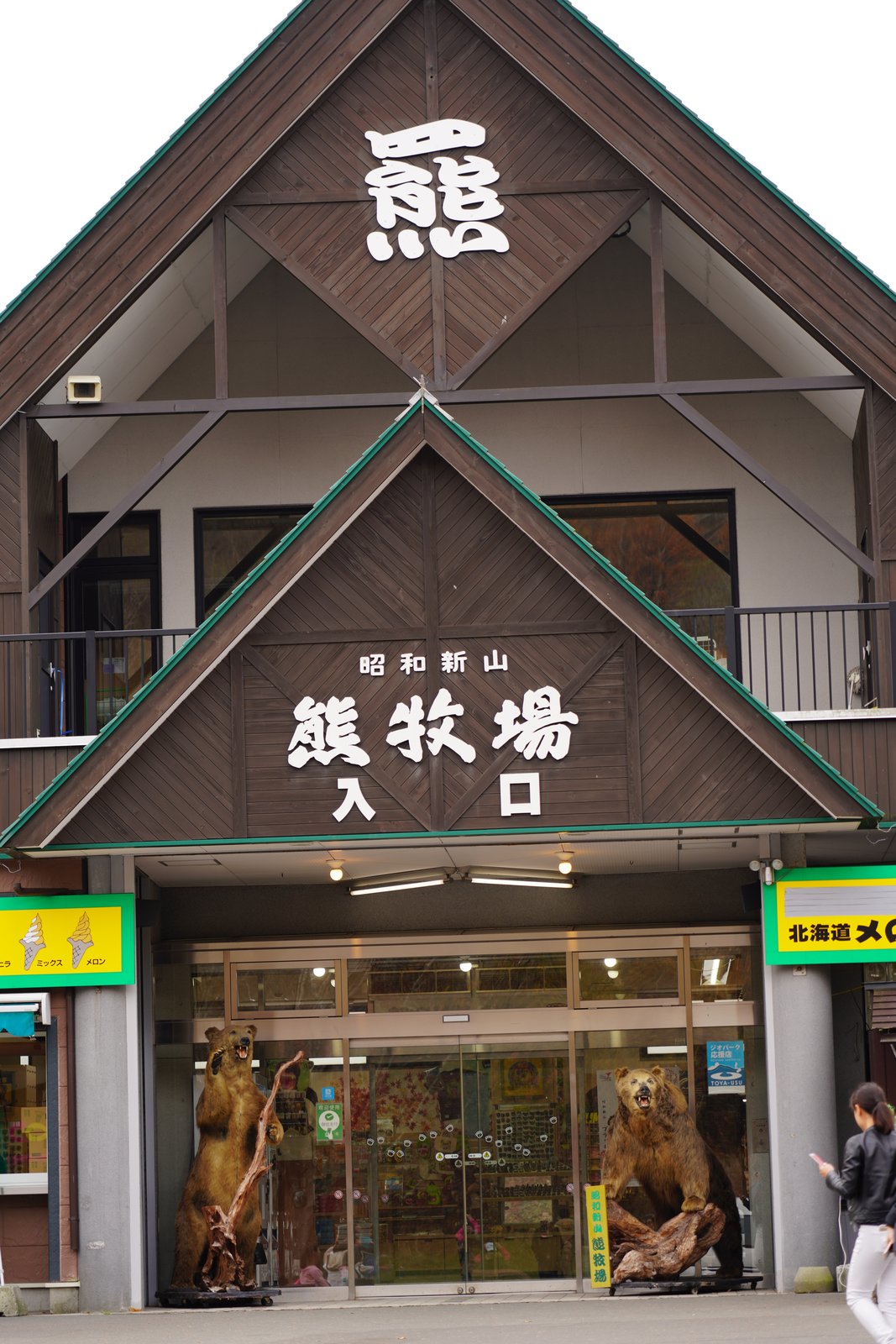
At the foot of Showa-Shinzan sits the Showa-Shinzan Bear Ranch. Here you can watch around 100 Ezo (Hokkaido) brown bears up close, kept in groups by age. Its signature attraction is the “human cage” (hito-no-ori), a special observation room where it is the humans who go inside the cage and get astonishingly close to the bears through the mesh—close enough to hear their breathing and calls.
The feeding experience, using bear cookies bought on site (200 yen a bag), is also a favorite; watching the bears stand up and beg delights adults and children alike. Along with a volcano visit, it has long been a classic stop on any Lake Toya sightseeing trip.
- Admission: adults (junior-high age and up) 1,000 yen / children (age 6 and up) 500 yen
- Hours: 8:30–17:00 (Apr 28–Oct) / 8:30–16:30 (Nov–Apr 27); open year-round
- Payment: admission is cash only
*Prices and hours are as of July 2026. Please check the official website for the latest details and year-end/New Year hours. For the Usuzan Ropeway and Showa-Shinzan itself, see our Mount Usu & Showa-Shinzan guide.
Michi-no-Eki Sobetsu Joho-kan “i” | farm stand and the Volcano Disaster Learning Center
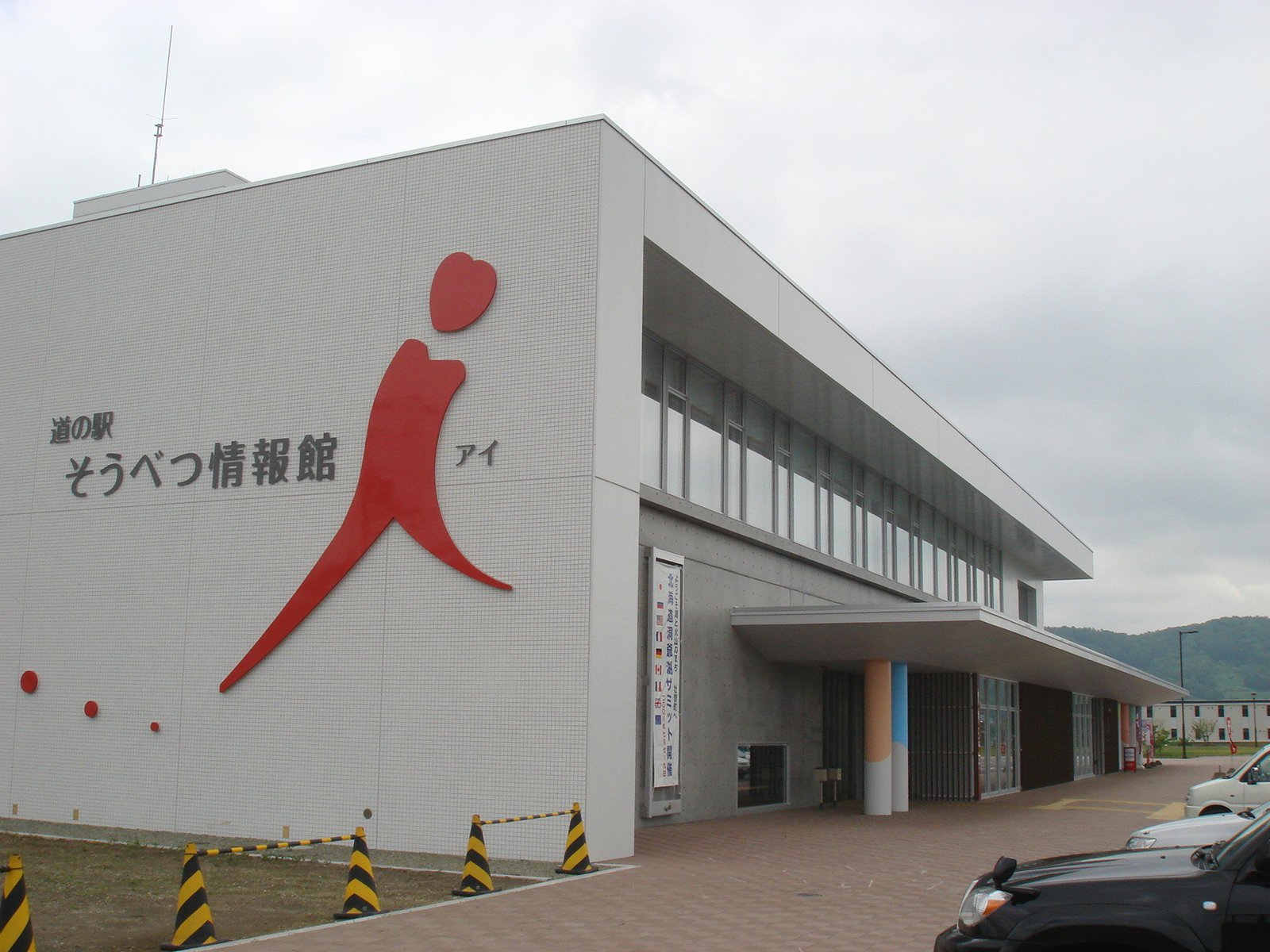
A perfect base for a drive is the Michi-no-Eki (roadside station) Sobetsu Joho-kan “i” in Takinomachi on the eastern shore. On the first floor, the farm stand “Sam’s” sells Sobetsu-grown vegetables and fruit, each labeled with a photo of its grower. You will also find local souvenirs available nowhere else, such as apple juice and original jams (the selection changes with the season).
What makes this roadside station special is the Volcano Disaster Learning Center on the second floor. Through exhibits and video you can learn the eruption history of the active Mount Usu and Showa-Shinzan, and the wisdom of coexisting with a volcano through “advance evacuation” that has saved lives. Stopping here before you set out gives much deeper meaning to what you see at Showa-Shinzan or on the Mount Usu hike. It is also handy to stock up on ingredients at the farm stand and cook them back at your lodging that evening (for more on local food, see our Lake Toya gourmet guide).
Yokozuna Kitanoumi Memorial Hall | the grand champion Sobetsu produced
Sobetsu is also the birthplace of the great Showa-era sumo grand champion (yokozuna) Kitanoumi. In Takinomachi, the Yokozuna Kitanoumi Memorial Hall (housed with the Sobetsu Local History Museum) honors his achievements, letting you feel the power of sumo and the town’s history through ceremonial aprons, championship records, and a life-size ring. It is a good indoor spot not only for sumo fans but also for a rainy day.
- Hours: 9:00–17:00
- Admission: adults 250 yen
- Winter closure: usually closed December through the end of March (for a winter visit, inquire in advance)
*Information as of July 2026. Please confirm opening status with the official website or similar.
Bankei and Benkei Onsen | quiet hot springs along the Osaru River
Another of Sobetsu’s charms is the chance to enjoy rustic hot springs deep in the hills, quite different from the bustle of Lake Toya’s hot-spring town. Heading south from the town center along the Osaru River, you reach two hot-spring areas: Bankei Onsen and Benkei Onsen.
Bankei Onsen has been used for therapeutic bathing since the Meiji era; a few inns and a day-use bathhouse are scattered along the river. Its waters are of the chloride and simple-spring type, with a hot source temperature of about 68°C. Benkei Onsen is a sodium-chloride spring, likewise fed by an abundant source above 60°C. Neither is a touristy resort—these are quiet baths loved by locals. Staying at a lodging by Lake Toya and hopping out to these mountain springs for a day soak is a connoisseur’s way to enjoy the area.
*Opening hours, day-use availability, and winter road conditions may change. Please check the latest information with each facility or the Sobetsu Tourist Association before you go.
Showa-Shinzan International Yukigassen | birthplace of competitive snowball fighting
Sobetsu’s signature winter event is the Showa-Shinzan International Yukigassen (snowball fight). In fact, competitive “sport yukigassen,” with its formal rules, was born right here in Sobetsu. Launched as a town-revitalization project, the first tournament was held in 1989; today, elite teams that have won regional qualifiers across Japan gather at the foot of Showa-Shinzan for one of the largest snowball-fight tournaments in the country. It has spread overseas, and international tournaments are now held as well.
It takes place every February. The most recent 37th tournament was held on February 21–22, 2026. Even just watching the players charge across the snow is thrilling. Please check the organizer’s official information for the next dates (*as of July 2026).
Access from Lake Toya Onsen and how to get around
All of Sobetsu’s spots are reachable by car from the Lake Toya Onsen hot-spring town (times are approximate):
- Showa-Shinzan Bear Ranch: about 15 minutes by car from Lake Toya Onsen
- Roadside station Sobetsu Joho-kan “i” & Kitanoumi Memorial Hall (Takinomachi): about 20 minutes by car
- Bankei & Benkei Onsen (along the Osaru River, toward Route 453): a further 20–30 minutes south by car
For a half-day model plan, a smooth route is Lake Toya Onsen → Showa-Shinzan Bear Ranch → Sobetsu Joho-kan “i” (farm stand & learning center) → Sobetsu Falls, returning to your lodging in the evening. With an extra night, you could add the mountain onsen of Bankei and Benkei, or seasonal fruit picking and the plum grove. Because the spots are spread out, this is an area where a rental car makes getting around far easier. In winter, watch for icy roads and seasonal closures (for example, the Kitanoumi Memorial Hall closes in winter), so confirm in advance.
Make a whole-house rental by Lake Toya your base for exploring Sobetsu
Sobetsu is just the right distance for “a little side trip.” That is exactly why we suggest basing yourself at a lodging by Lake Toya and moving back and forth between the lake and the neighboring town. All 11 Kamonoya properties are whole-house or whole-unit rentals with a kitchen. Take home the Sobetsu vegetables and fruit you picked up at the roadside farm stand and cook a Hokkaido dinner in your own kitchen that night—the “living-as-you-travel” style of stay. Stay several nights and you can take your time: “the bear ranch and roadside station today, the onsen tomorrow,” choosing by the weather.
Booking directly through our official site is the best-value official rate, with no agency commission (best-rate guarantee). The longer you stay, the bigger the discount. Please check your preferred dates from the Check availability here. You can see the features of each property on our list of facilities.
Frequently asked questions
Q. How far is Sobetsu from Lake Toya, and do I need a car?
Sobetsu is the neighboring town along the eastern shore of Lake Toya; the main spots are about 15–30 minutes by car from the Lake Toya Onsen town. Because the sights are spread out, a rental car lets you get around efficiently. Public transport is limited, so check timetables in advance to be safe.
Q. Is the Showa-Shinzan Bear Ranch open in winter?
Yes—the bear ranch is open year-round, with winter hours (Nov–Apr 27) of 8:30–16:30. Hours can change by season and over the New Year holidays, so please check the official website for the latest. The apples for the feeding experience are offered roughly from autumn through March (*as of July 2026).
Q. Are there Sobetsu spots to enjoy on a rainy day?
We recommend the indoor options: the bear ranch at the foot of Showa-Shinzan, the Volcano Disaster Learning Center at Sobetsu Joho-kan “i,” and the Kitanoumi Memorial Hall. Relaxing in a hot spring is also a fine way to spend a rainy day.
Q. I’m also curious about Sobetsu’s fruit picking and plum grove.
By all means, if the season is right. For early-summer-to-autumn fruit picking see our Sobetsu fruit-picking guide, and for the plums in spring (usually around mid-May) see our Sobetsu Park plum grove guide. Combined with the spots in this article, they let you enjoy a full day in Sobetsu.