Hello from Kamonoya, an operator of whole-house rentals at Lake Toya in Hokkaido. When you stay at Lake Toya, it’s easy to fill your whole trip with the lake alone—but venture just a little further and you’ll find that the “next town over” is quietly wonderful too. In this guide, we introduce Toyoura, the town immediately west of Lake Toya, facing Funka Bay (Uchiura Bay), through the eyes of local innkeepers. From Koboro—”Japan’s most remote station”—to Kamui Chashi Historic Park (whose name means “fortress of the gods” in the Ainu language), the calm sheltered sea of Toyoura Beach Park, and local flavors like Toyoura strawberries, Funka Bay scallops, and Toyoura SPF pork. From Kamonoya at Lake Toya it’s about a 30–40 minute drive—an easy day trip.
What kind of town is Toyoura? A strawberry-and-scallop town next to Lake Toya
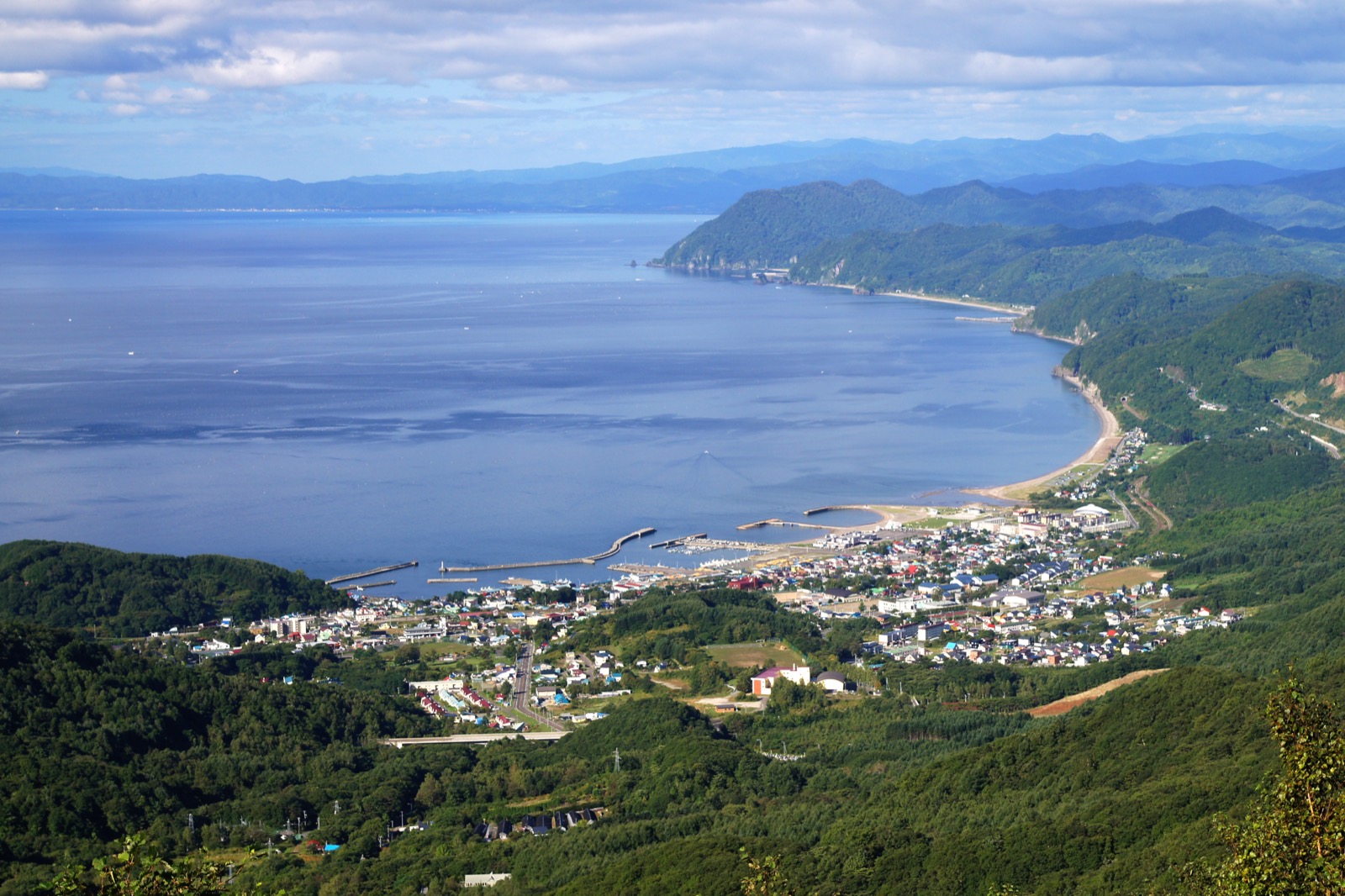
Toyoura is a town of sea and mountains facing Funka Bay (Uchiura Bay), just west of Toyako Town. It’s small—home to roughly 3,500 people—but it’s a treasure trove of good food: the brand-name Toyoura strawberry, with over 80 years of history; scallops raised in the nutrient-rich waters of Funka Bay; and Toyoura SPF pork, raised in a clean, healthy environment. Every early summer, the town’s “Toyoura Strawberry & Pork Festival” lets you enjoy two of these specialties at once.
As a destination, Toyoura doesn’t have a large hot-spring resort district like Lake Toya Onsen. That’s exactly why it suits travelers who want to escape the crowds and take it slow—and anyone who loves railways, nature, and local ingredients. If you’re staying multiple nights at Lake Toya, we recommend setting aside one day for a trip out to Toyoura. Driving there along the lakeshore is part of the fun (see also our Lake Toya drive guide).
Koboro, “Japan’s most remote station”: reachable only by train
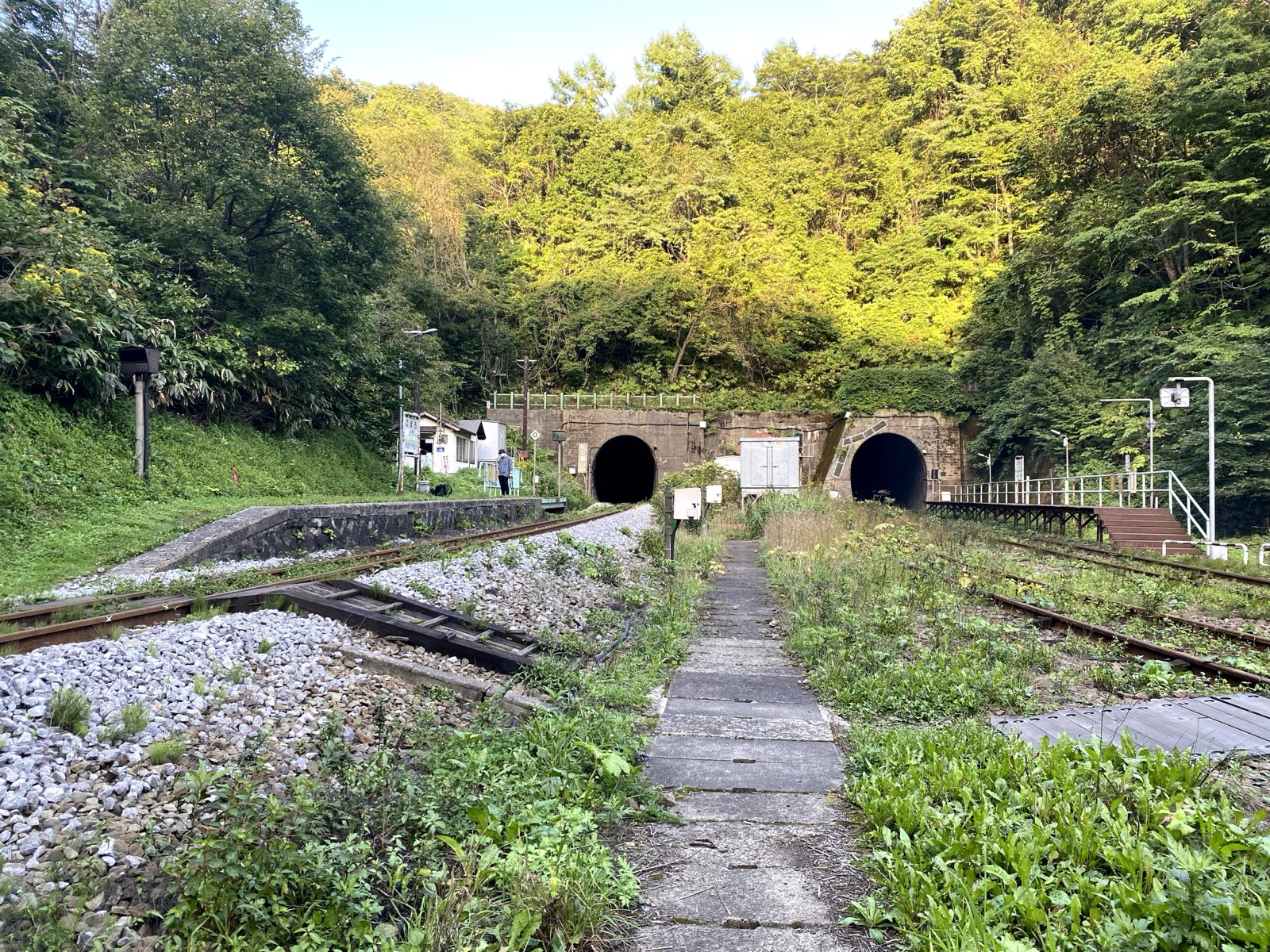
No account of Toyoura is complete without Koboro Station, famous among railway fans nationwide as “Japan’s most remote station.” It’s a stop on the JR Muroran Main Line, tucked quietly into a narrow gap of only about 80 meters between two tunnels.
You can’t reach it by car or on foot—only by train
The most striking thing about Koboro is that no road connects to the station. You can’t drive up to it, and you can’t walk in from a nearby road. The only way to visit is by train. Very few trains stop here each day (around eight), and—worth noting—there are no trains during the convenient midday hours.
The easiest approach is to take a local train from Toyoura Station toward Oshamanbe to reach Koboro, explore the area, then return on a train bound for Higashi-Muroran. Because services are so infrequent, don’t wing it—always check the time of your return train before you go. Lose yourself in the scenery and miss that one train, and you may be waiting a very long time for the next. Always confirm the latest times on the JR Hokkaido official site and similar sources.
Things to watch out for: rough trails and winter
There are coastal paths and walking trails around the station, but some stretches are steep and slippery, like a mountain trail. Wear sturdy, non-slip shoes. In winter, snow blocks the paths and they become impassable with ordinary gear—we don’t recommend exploring the area in the snowy season (it requires snowshoes and experience). Prepare thoroughly for cold and safety, including while waiting on the platform.
As a memento of your visit, a “Remote Station Arrival Certificate” is issued. You’ll need a photo of yourself with the station nameplate in the background; you can receive the certificate at places such as Michi-no-Eki Toyoura (roadside station) and the Toyoura Onsen Shiosai hot spring. (Issuing locations and conditions may change, so please confirm with the tourism association in advance.)
Kamui Chashi Historic Park: an Ainu “fortress of the gods” and a sweeping Funka Bay panorama
Kamui Chashi Historic Park, in the Rebunge area of Toyoura, lets you enjoy history and a magnificent view at once. “Kamui Chashi” means “fortress of the gods” in the Ainu language, and true to its name, the park is built on the site of a “chashi” (fortress) once constructed by the Ainu people. Set on high ground with commanding views, it is thought to have served as a lookout and defensive stronghold. It is also designated a national Place of Scenic Beauty (“Pirika Noka”).
The highlight is the observation deck (a gazebo) reached by climbing 135 steps. From here you can take in the vast, crisp expanse of Funka Bay, along with the Muroran Main Line running below and Toyoura’s coastline. Wooden walkways let you enjoy both a historical stroll and the view at a relaxed pace. A moat that remains from the old fortress (16 m long, 5 m wide, 3 m deep) is another point of interest.
The park has a parking lot and is open year-round, but the parking lot is closed during winter. The steps and walkways can be slippery in rain or snow, so wear non-slip shoes. *Opening status and parking availability change with the season; please check the official Toyoura Town and tourism association sites for the latest information.
Toyoura Beach Park: camping and swimming in a calm, breakwater-sheltered sea
If you’d like to enjoy the sea, head to Toyoura Beach Park. This is an unusual kind of seaside park where breakwaters enclose the water to keep the waves calm. It’s easy for families with small children, and you’ll see people fishing—including for crabs—off the breakwater. The campsites are on grass rather than sand, so your tent floor won’t get covered in sand—a nice bonus.
The campsite is generally open from late April to late September, and the swimming (bathing) season runs roughly from mid-July to late August. In recent years, advance booking and prepayment through the online reservation site “Nap” have been required. *Operating and swimming periods and reservation methods vary by year. Please always check the official Toyoura Town and tourism association sites before you go (information as of July 2026).
A signature event of early summer in Toyoura is the “Toyoura Strawberry & Pork Festival,” a popular event where you can taste the town’s two great specialties—Toyoura strawberries and Toyoura SPF pork. It draws big crowds when it’s held (dates vary by year).
Toyoura’s flavors: strawberries, scallops, SPF pork—and a hot spring
Toyoura strawberries
Toyoura strawberries boast over 80 years of history and are trademarked as “Toyoura Strawberry,” making them one of Hokkaido’s most traditional brand strawberries. You can taste varieties unique to this land, such as “Kentaro,” which has firm flesh and a fine balance of sweetness and acidity, and “Hokowase,” which is intensely sweet but so perishable that it rarely leaves the town.
Strawberry picking is normally available at “Berry Farm Toyoura” in town from around mid-June, but in 2026 the farm is closed for grounds maintenance (as announced on its official site). For when strawberry picking resumes, and for purchases at farm stands or events, please check the latest information from Toyoura Town and the tourism association. *Timing, prices, and operating status vary by year.
Funka Bay scallops and Toyoura SPF pork
Scallops raised in the nutrient-rich waters of Funka Bay are one of Toyoura’s signature gifts from the sea. The tourism association offers experiences such as year-round “scallop fishing.” Another local specialty is Toyoura SPF pork. SPF stands for “Specific Pathogen Free”—healthy pigs free of certain pathogens—prized for its mild flavor and tender texture. You can enjoy it at restaurants in town.
Toyoura Onsen Shiosai (natural hot spring)
After a day at the remote station or by the sea, take a break at Toyoura Onsen Shiosai. With an abundant flow of 500 liters per minute of free-flowing natural spring water (gen’sen kakenagashi), it offers a variety of Japanese- and Western-style baths. It welcomes day visitors and also offers overnight stays. Day-use hours and rates can change from day to day, so please check the official information before visiting. For day-use hot springs across the Lake Toya area, see our Lake Toya day-onsen guide.
From Lake Toya to Toyoura: a sample day-trip plan
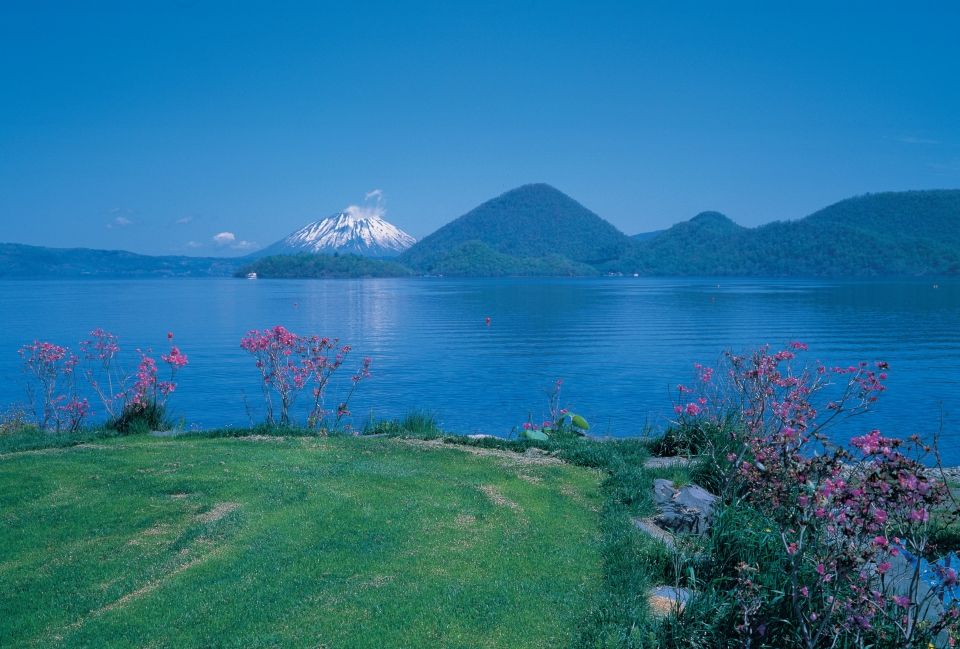
Here’s a sample one-day trip to Toyoura, based at Kamonoya on Lake Toya.
- Morning: Leave Kamonoya → drive along the lakeshore toward Toyoura (about 30–40 minutes by car) → climb the 135 steps at Kamui Chashi Historic Park and soak up the Funka Bay panorama
- Lunch: Toyoura SPF pork or Funka Bay scallops at a restaurant in town
- Afternoon: A calm-sea stroll and fishing at Toyoura Beach Park (swimming in summer) → or, timed to the train schedule, the “remote station” experience at Koboro
- Evening: A soak at Toyoura Onsen Shiosai → back to your lodge at Lake Toya to relax by the lake
Buying Toyoura ingredients to take back and cooking “dinner at home” in your lodge’s kitchen is another great option. Our Lake Toya gourmet guide covers local ingredients and food. If you don’t have a car, see also our bus access from JR Toya Station (JR is the main way to reach the Toyoura direction).
Base yourself in a kitchen-equipped private rental for Toyoura and Lake Toya
Stay by the shores of Lake Toya and spend your days venturing out to Toyoura—Kamonoya’s whole-house rentals are perfect for that kind of “have-it-all” trip. Every house is a private, kitchen-equipped rental, so you can cook the strawberries, scallops, and SPF pork you pick up in Toyoura whenever you like, without worrying about other guests. Families with small children and larger groups can spread out and relax.
- Toya House — A whole-house rental in the center of the onsen town. Up to 8 guests, with BBQ facilities.
- Toya INN-West — Central, with a wood-burning stove. Up to 9 guests.
- Toya INN-East — Central, with a large screen. Up to 11 guests.
- Lake Toya Building 1R — An apartment-type unit for couples and small groups.
For our other properties, please see the list of facilities.
Booking directly through our official site is the best-value official rate, with no agency commission (best-rate guarantee). Once your dates are set, start by checking availability. Check availability here.
FAQ
Q. How far is Toyoura from Lake Toya?
A. It’s the next town over—about a 30–40 minute drive from Kamonoya at Lake Toya Onsen to central Toyoura. It’s an easy distance for a day trip, though travel time varies with your route and the season.
Q. Can I drive to Koboro Station?
A. No. No road connects to Koboro Station, so you can’t reach it by car or on foot—only by train. Because very few trains stop there each day, always check both your outbound and return times before you go. In winter, we don’t recommend exploring the area due to snow.
Q. Can I go strawberry picking in Toyoura?
A. Normally you can pick strawberries at “Berry Farm Toyoura” in town from around mid-June, but the farm is announced as closed for grounds maintenance in 2026. Please check the latest status with Toyoura Town and the tourism association. Purchases at farm stands and events may be possible depending on the season.
Q. When can I swim at Toyoura Beach Park?
A. The swimming season is roughly mid-July to late August. The campsite operates from about late April to late September, and in recent years online reservation (via “Nap”) is required. Periods and reservation methods vary by year, so please check the official site in advance.