Once the blossoms fall, the crowds drift away from the famous cherry-blossom spots. At Usu Zenkoji Temple, though, you could argue the best is only just beginning. As the cherry blossoms finish, azaleas take their place across the grounds. The visitors thin out, the greens deepen, and the temple settles back into its natural quiet. Kamonoya, which runs 11 whole-house rentals around Lake Toya, shares how to enjoy Usu Zenkoji Temple in early summer.
For the history of the temple and the roughly 200-year-old Ezo mountain cherry known as the “Rock-Splitting Cherry” in the grounds, see our guide to Usu Zenkoji Temple and the Rock-Splitting Cherry. If you are visiting during cherry-blossom season, that is the place to start.
After the cherry blossoms comes the azalea season
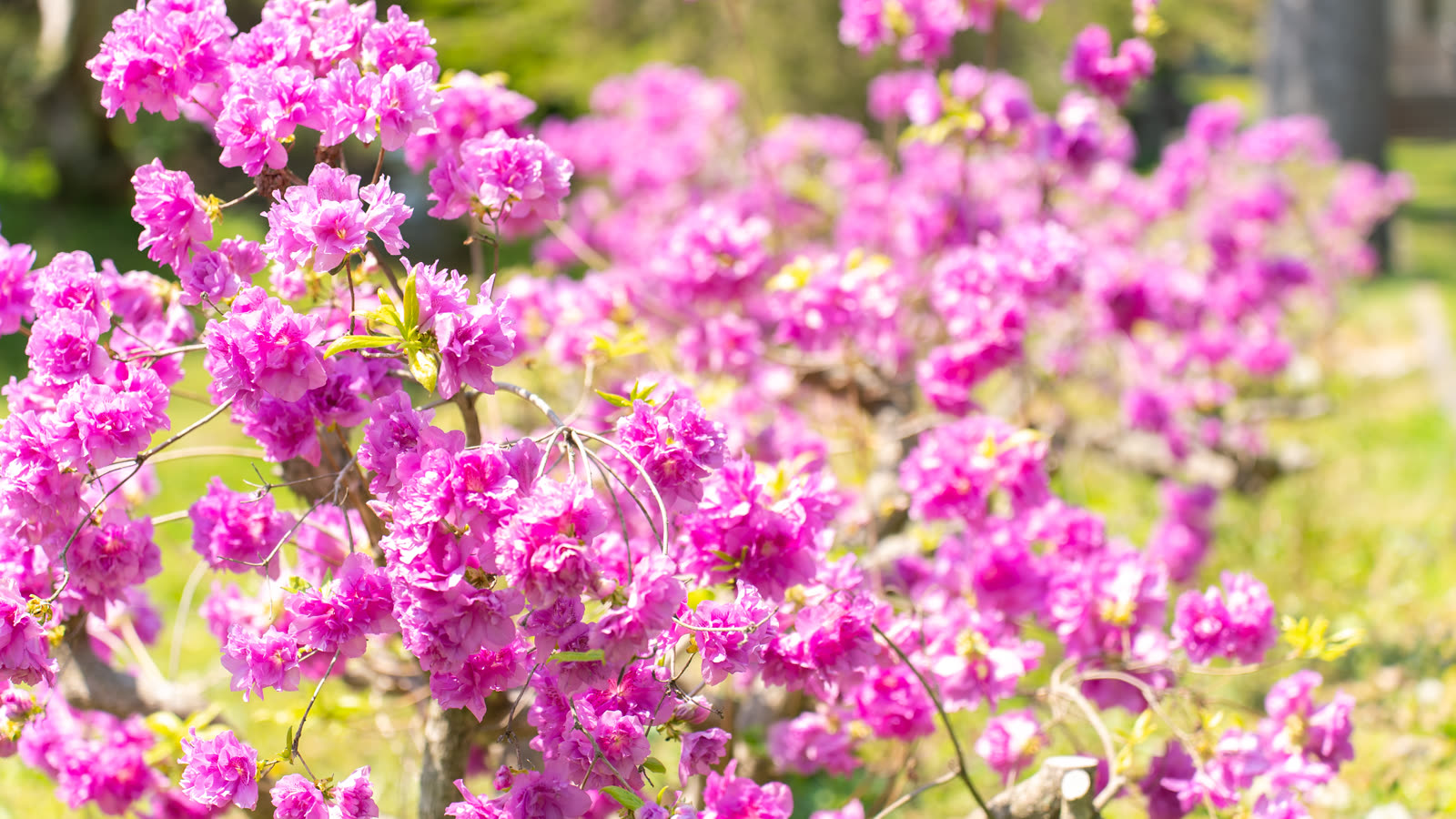
Usu Zenkoji is known as a “temple of flowers.” From cherry blossoms to azaleas, peonies, and then hydrangeas, the blooms follow one after another from spring into summer, never quite pausing.
Azaleas are usually at their best from mid- to late May, right after the cherry blossoms. At this time of year in Hokkaido, the mornings and evenings still carry a chill, yet the midday sun already has the strength of early summer. The air is clear, and the greens of the trees are at their brightest. Set against those fresh young leaves, the colors of the azaleas stand out all the more.
Because this is the changeover from the cherry blossoms, in some years the last of the late-blooming cherries overlaps with the first of the azaleas. Bloom timing shifts with the temperature, so before you fix your itinerary, please check the latest bloom conditions through the official announcements of the local government or tourism association.
Azaleas seen through the main hall’s window
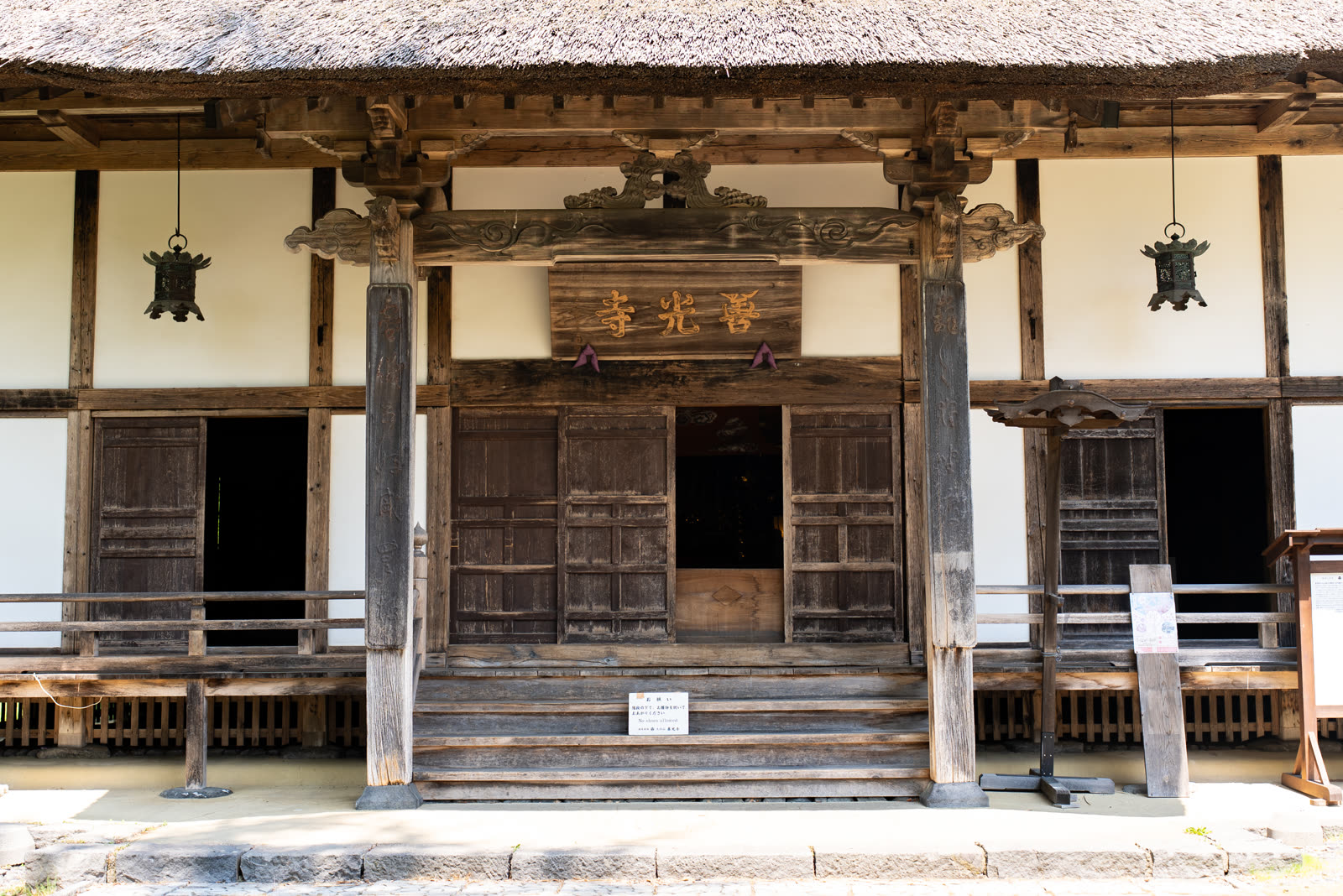
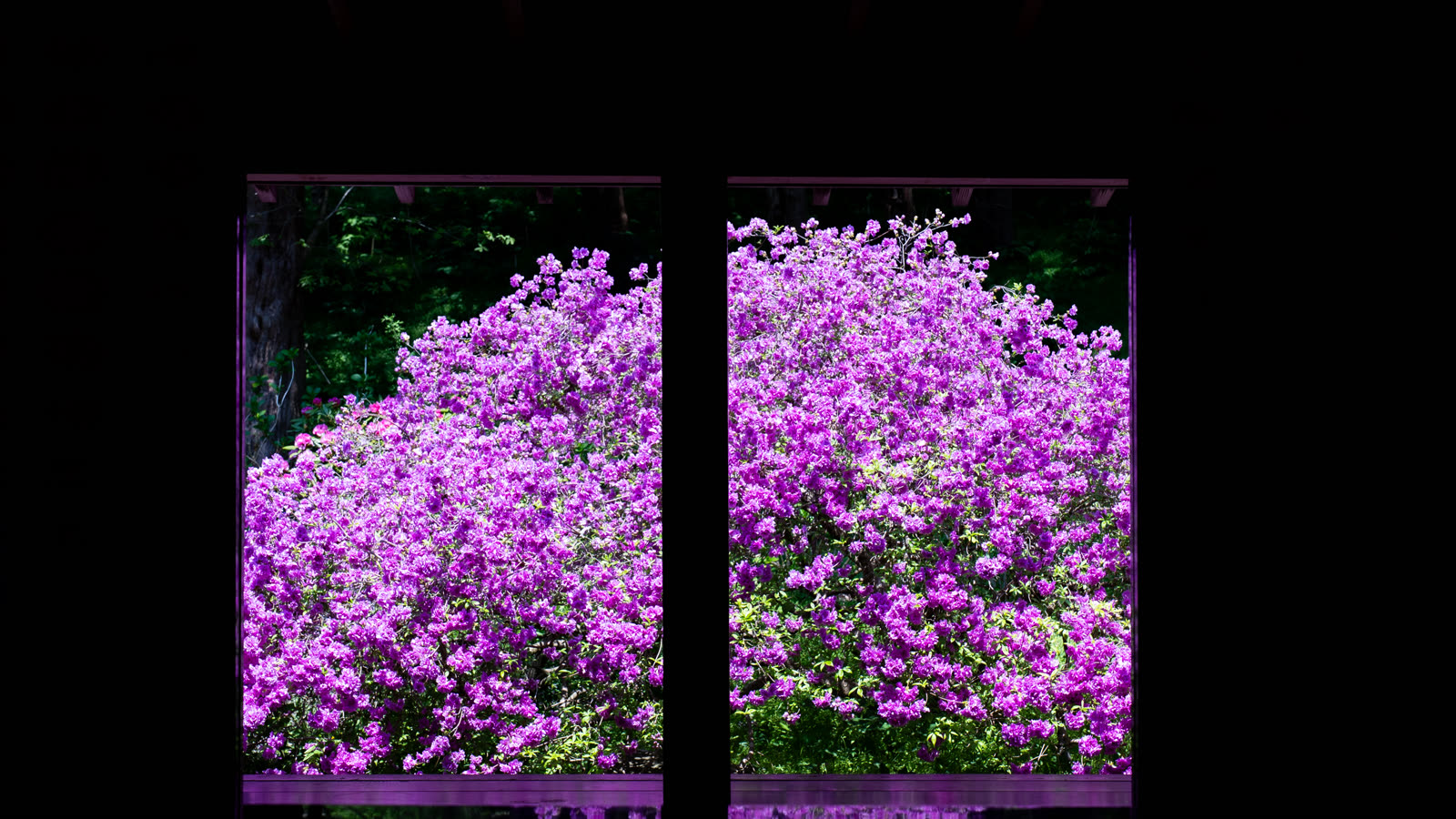
To speak of this temple’s azaleas, you have to begin with the thatched-roof main hall. It is an unadorned, quietly composed building. And the most memorable sight at Usu Zenkoji is the azaleas seen through the main hall’s window. Beyond a frame of wood, the azaleas sit still, brimming with color. Like a painting set within a frame, the scene outside rises up as a single, self-contained view. That one small act—looking “from inside the window”—turns the flowers here into an experience you will find nowhere else.
This is not a view you can catch while rushing through. Settle in, sit for a while, and wait for the light to shift. Only when you spend your time that way does the scene truly come into focus.
Etiquette for a quiet visit
What must not be forgotten is that Usu Zenkoji remains a place of worship. Before it is a spot famous for flowers, it is a temple. When you visit, please come with the following in mind.
- Pause at the temple gate and bow before entering the grounds. Turn and bow again as you leave. It is not a difficult ritual—simply a way of expressing “please excuse my intrusion.”
- Keep your voice down. In the grounds, speak only loudly enough to reach the person beside you. The quiet itself is this temple’s greatest attraction.
- Do not photograph or keep waiting those who are praying. The area in front of the main hall and by the window is also a passage for worshippers. Please don’t set up your camera and monopolize the spot; give way to one another.
- Follow the on-site signs regarding photography, tripods, and where you may go. Each temple has its own approach, and the posted notices and guidance always take priority.
- Do not touch the flowers or branches, and do not take them home. Someone tends to them.
- Take your trash with you. It goes without saying, but the quieter the place, the more a single piece of litter stands out.
Details about visiting, and the guidance for any given year, may change. Please check the official information before you set out.
Pair it with early-summer Lake Toya
Usu Zenkoji Temple is about a 20-minute drive from the Date IC or Abuta-Toyako IC on the Doo Expressway, and about a 25-minute walk from JR Usu Station. It is close enough to build an easy plan while staying at Lake Toya: visit in the morning and head back to the lakeside in the afternoon.
Mid- to late May is also when the Lake Toya area is at its busiest for blooms. In the neighboring town, the plum grove at Sobetsu Park comes into season, and in Toyako Town the Daffodil Hill fills with daffodils. It’s best to get the big picture with our flower bloom calendar, then map out your route with our spring flower-viewing model course. By this time of year at Lake Toya, the Lake Toya Long-run Fireworks Festival has usually already begun. Azaleas by day, fireworks over the lake by night: having both the still and the lively fit into a single day is something only this season offers.
A base for early-summer temple visits: Kamonoya’s stays
Every Kamonoya stay is a whole-house or private-room rental with a full kitchen, so you never share space with other guests. The quiet hours you spent at the temple carry on undisturbed after you return to your lodging.
- For two, in peace and quiet: Toya Tiny Cabin (up to 4 guests, from ¥20,000/night). A hideaway-style whole-house rental away from the bustle, where you can also enjoy a BBQ.
- For a light, small-group trip: Lake Toya Building 1R Hokusai (up to 3 guests, from ¥8,000/night). An apartment-type room in the heart of the onsen town—just the right base for strolls and lakeside walks.
- For a family trip in early summer: Toya House (up to 8 guests, from ¥24,000/night). A whole-house rental in the town center where you can also have a BBQ. With the long daylight of the season, there’s plenty of unhurried garden time from the evening on.
You can see our other properties from the list of facilities.
Booking directly through our official site is the best-value official rate, with no agency commission (best-rate guarantee). Check availability here.
FAQ
Q. When are the azaleas at Usu Zenkoji Temple at their best?
They usually reach their peak from mid- to late May, right after the cherry blossoms. The timing shifts with the year and the temperature, and in some years it overlaps with the late-blooming cherries. Usu Zenkoji is known as a “temple of flowers,” with blooms carrying on from cherry blossoms to azaleas, peonies, and hydrangeas, so it rewards visits across the seasons. Please check the official announcements for the latest bloom conditions.
Q. Can anyone see the azaleas through the main hall’s window?
The view of the azaleas outside, seen from the main hall’s window, is well known as a sight unique to this temple. However, Usu Zenkoji remains a place of worship, so please follow the on-site signs and guidance regarding where you may go and whether photography is allowed. We hope you’ll enjoy it quietly and considerately, taking care not to disturb those who are praying.
Q. Cherry-blossom season or azalea season—which should I visit?
If you’re after liveliness and splendor, choose the cherry blossoms (usually late April to mid-May); if you’re after quiet and calm, choose the azaleas (usually mid- to late May). Cherry-blossom season draws crowds, while during the azalea season the grounds grow quiet. For those who want to take their time with the view through the main hall’s window, we recommend the azalea season. For the cherry blossoms, see our guide to Usu Zenkoji Temple and the Rock-Splitting Cherry.