In the Tomioka district of Toyako Town, there is a hillside that fills with daffodils every spring. Known as the “Daffodil Hill,” this is not a tourist facility. It is a place that one private individual has spent some twenty years cultivating on their own land. Kamonoya, which runs 11 whole-house rentals around Lake Toya, shares here what this hill is and the etiquette we ask you to observe without fail when visiting.
First, one request. If you find yourself thinking “I’d love to go,” please read the etiquette section below all the way through. Whether this scenery survives into next year depends on how each of us who visits behaves.
A hill one person spent twenty years cultivating
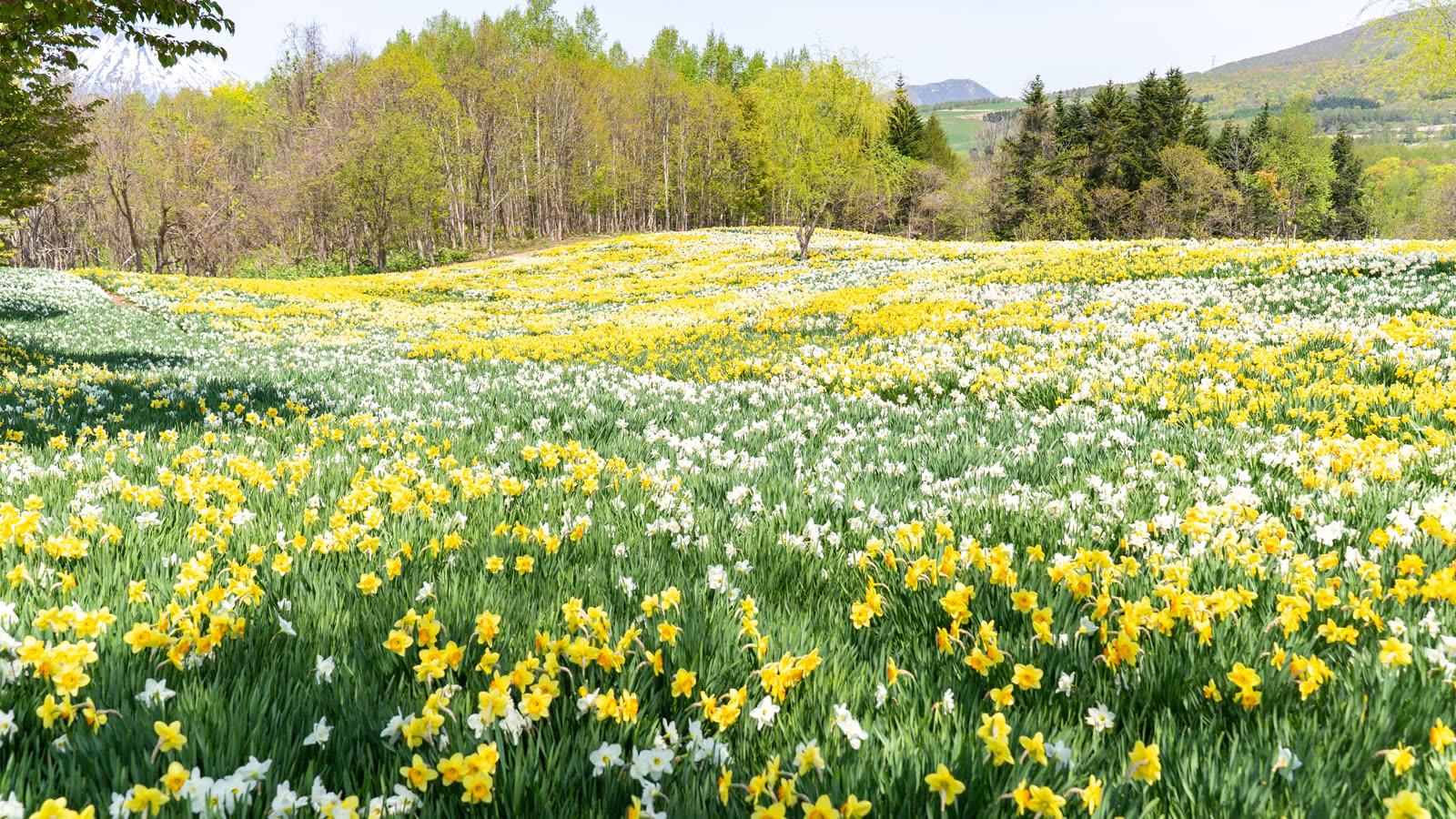
The Daffodil Hill is a place where yellow and white daffodils spread across a slope of about 5,000 m². News coverage has described it as holding roughly 150,000 to 250,000 blooms. A hillside carpeted in daffodils is no exaggeration at all.
Yet there is no ticket booth, no information center, and no management office on this hill. This is private land belonging to one individual, and the scenery you see today is the result of a single person planting bulbs a few at a time and tending them over some twenty years. Someone’s dedicated care happens to be visible from the road, and we are being allowed to see it. This is a place to visit while keeping that sense of respectful distance.
Please also note that whether the owner is welcoming visitors in any given year may vary depending on their wishes and the circumstances of that particular season. Kamonoya cannot promise that “you can always enter freely.” Before you set out, please check the latest information, such as official announcements from the town or the tourism association. If there are signs or requests posted on site, follow them above all else.
A view unique to this land, with Mount Yotei behind
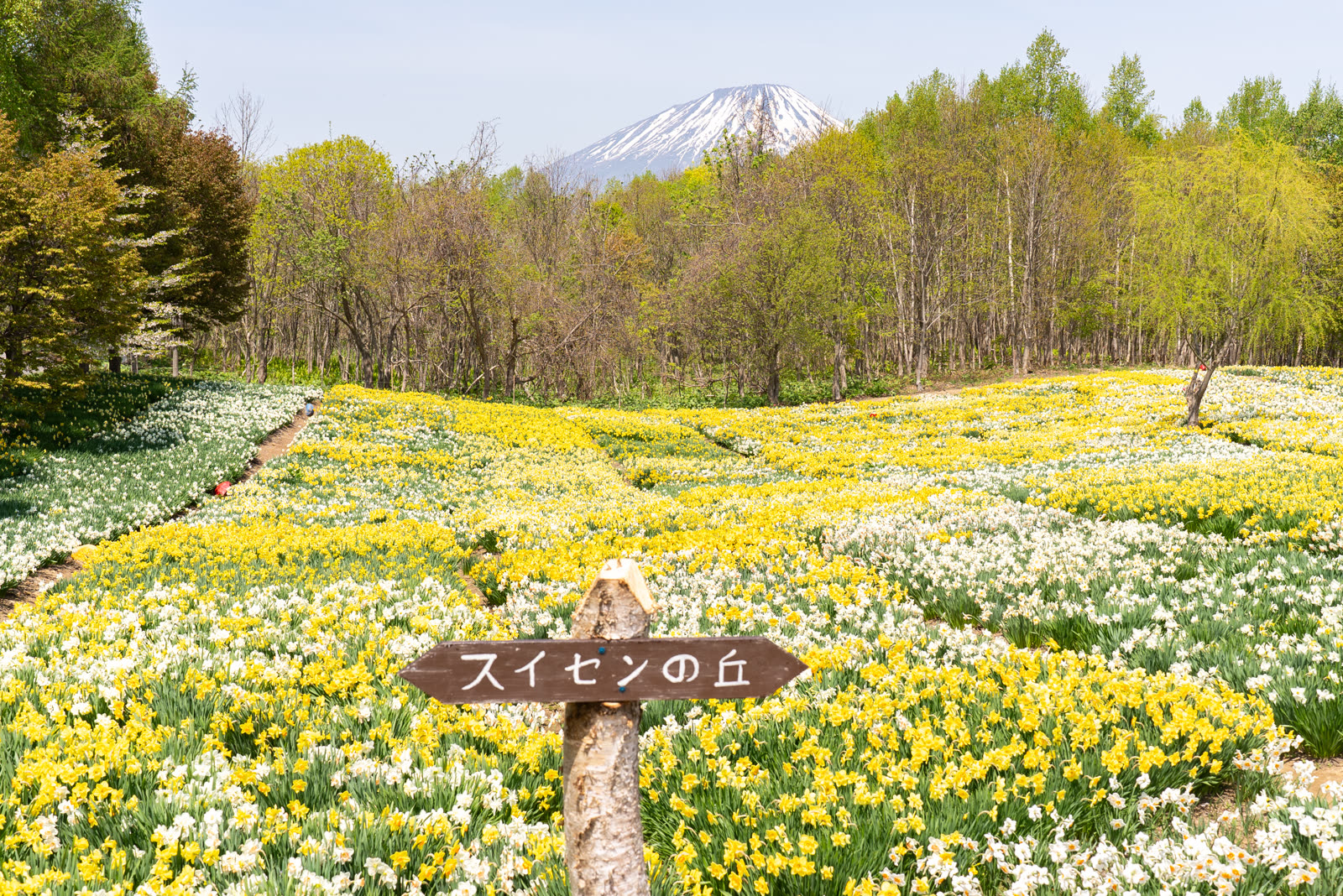
What makes the daffodils on this hill look so special is not the flowers alone, but the fact that Mount Yotei rises in the background. Yellow and white fill the slope, and beyond it Mount Yotei stands tall, still wrapped in snow even in May. Flowers in the foreground, a mountain behind. Even the same daffodils look completely different here than in a city flowerbed. On a clear morning, when the light comes in at an angle, each single bloom takes on shadow and the whole hill appears three-dimensional.
Best viewing is usually early to late May
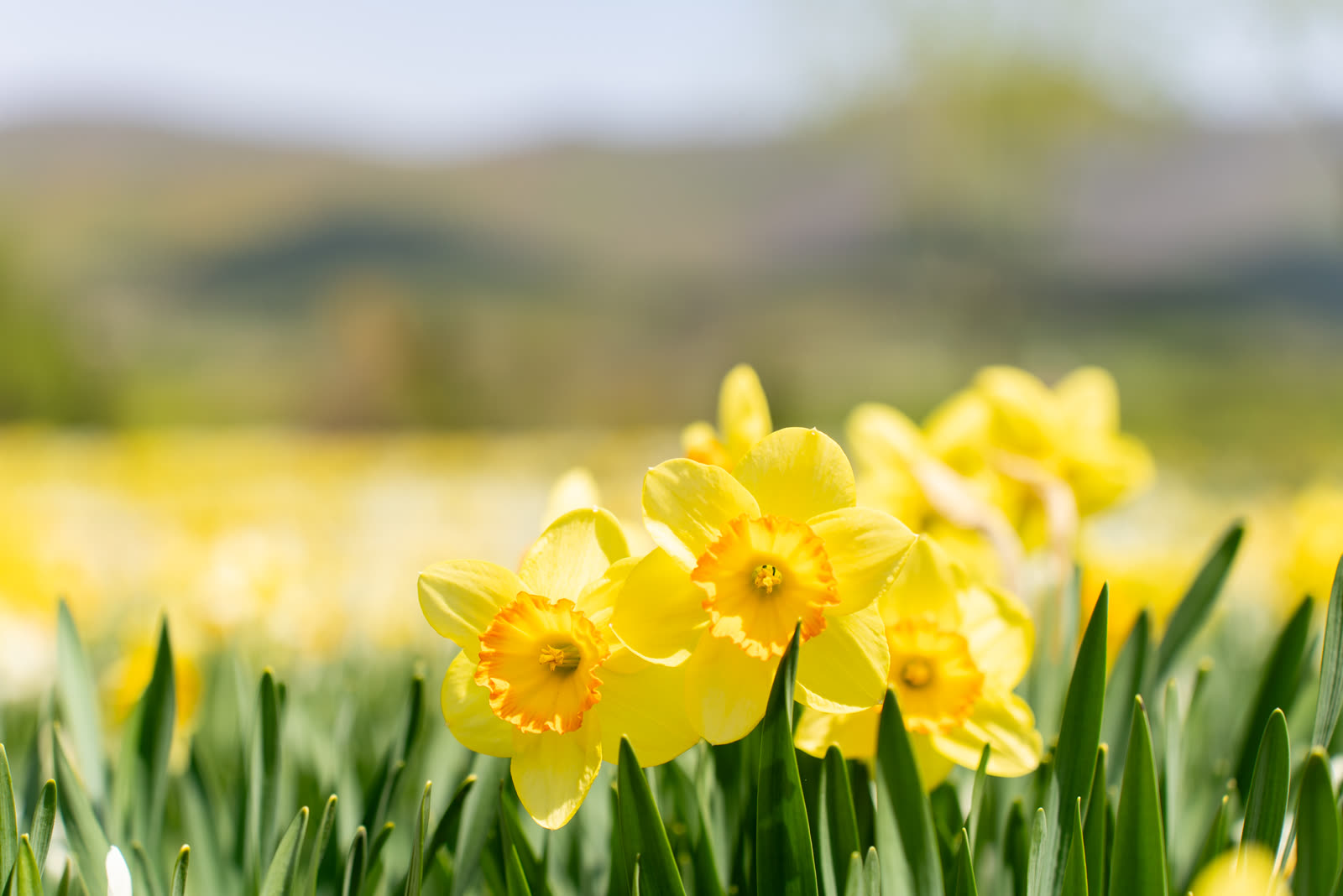
The daffodils are usually at their best from early May (just after Golden Week) to around late May. Spring in Hokkaido comes about a month later than on the main island of Honshu, and the daffodil season arrives chasing on the heels of the cherry blossoms. Depending on the year’s temperatures, the bloom can come earlier or later—in some years they are still to come during the peak of the Golden Week holidays, while in others they reach their best just after the holidays end.
At this time of year, the flowers around Lake Toya change one after another. In neighboring Sobetsu, the plum grove at Sobetsu Park is usually at its best around mid-May, and at Usu Zenkoji Temple in Date City the cherry blossoms come first, followed by the azaleas. Which flower blooms when is summarized in our Lake Toya flower-viewing calendar, and a one-night, two-day route linking the flowers is laid out in our spring flower-hopping model course. For spring around Lake Toya in general, see our spring Lake Toya guide.
Etiquette to read without fail before you visit
To repeat: this is private land that one individual tends with great care. It is not a tourist attraction. Please be sure to observe the following.
- Do not park on the roadside along the prefectural road. It is not a wide road. If cars line the shoulder, the local residents’ everyday route is blocked and farm vehicles can no longer pass. When you cannot secure a parking spot, have the courage to drive on without stopping.
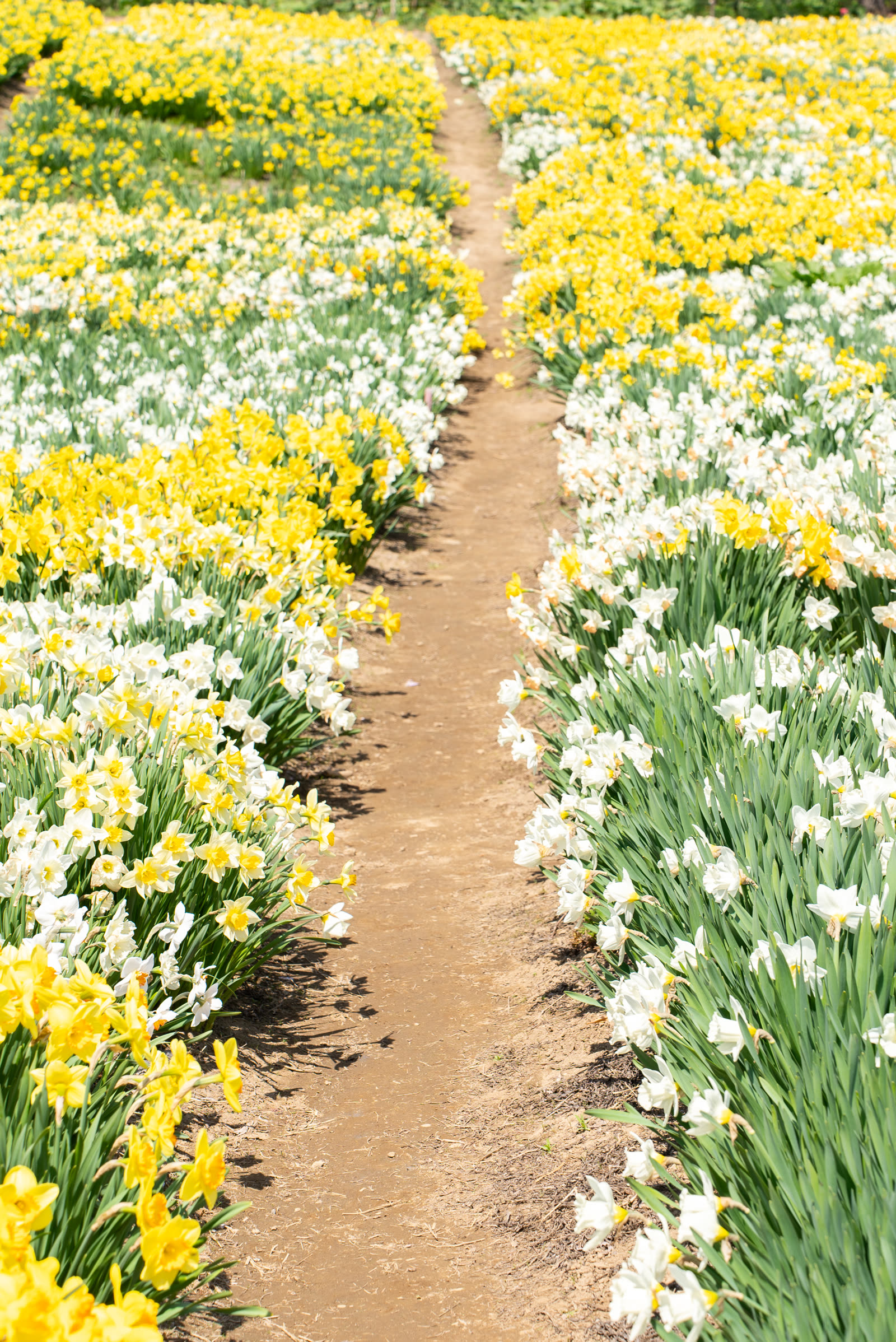
- Do not enter the fields or the slope. For a single photo taken from among the flowers, bulbs get trampled. Trampled spots produce no flowers the following year. You can take your photos from the road.
- Do not pick flowers, dig up bulbs, or break stems. “Just one” multiplied by hundreds of people, and the hill stops being a hill.
- Always take your trash home. There are no bins. Drink containers, wrappers—please carry all of it home with you.
- Be considerate of the neighbors’ daily life. The surroundings are places of living and farming. Don’t raise your voice, don’t linger for long stretches early in the morning or at night, and don’t enter private roads or property. Flying drones and the like can also be an inconsiderate act toward those around you.
- Do not descend on the owner. The urge to say thank you is entirely understandable, but quietly being allowed to see it and quietly heading home is the greatest form of respect.
- On-site signs and requests take top priority. The guidance posted on site always takes precedence over anything written in this article.
This hill is not scenery created by someone for profit. If visitors’ manners are poor and it can no longer be seen from next year, no one would be in a position to complain. That is the kind of place this is.
A base for the daffodil season: Kamonoya’s lodgings
All of Kamonoya’s lodgings are whole-house or whole-unit rentals with a full kitchen. Since you never share space with other guests, you can plan an itinerary like setting out when the morning light is at its most beautiful and enjoying a leisurely breakfast after you return.
- For a taste of the rural landscape: Toya Farmer’s House (up to 18 guests, from ¥25,000/night). A large whole-house rental set in farming country, with a fireplace and BBQ available. Depending on the direction, you can see Mount Yotei.
- For a three-generation or large-group spring trip: Lake Toya Base (up to 20 guests, from ¥30,000/night). A whole-house rental with a fireplace and a large screen. For staying with a big group, see our large-group Lake Toya travel guide too.
- For traveling light as a pair: Lake Toya Building 1R (up to 3 guests, from ¥7,000/night). An apartment-type room in the heart of the onsen town, ideally located as a base for flower-hopping by car.
Our other properties can be found on the list of facilities.
Booking directly through our official site is the best-value official rate, with no agency commission (best-rate guarantee). Check availability here.
FAQ
Q. When is the best time to see the Daffodil Hill?
Usually from early May (just after Golden Week) to around late May. The bloom shifts earlier or later depending on the year’s temperatures. Because spring in Hokkaido comes about a month later than on Honshu, the daffodils bloom chasing after the cherry-blossom season. Please check the latest bloom information before you set out.
Q. Can anyone go and see it freely? Is there an admission fee?
The Daffodil Hill is private land belonging to an individual, located along the prefectural road in the Tomioka district of Toyako Town, and it is not a tourist facility. Whether the owner is welcoming visitors in any given year may vary depending on their wishes and that season’s circumstances, so Kamonoya cannot tell you “you can enter anytime.” If there are signs or requests posted on site, always follow them, and absolutely refrain from parking on the road, entering the fields, or picking flowers.
Q. Is there anything to be careful about when taking photos?
Please shoot from the road without stepping onto the slope or into the fields. For a single photo taken from among the flowers, bulbs get trampled, and that spot produces no flowers the following year. Do not park your car on the road or block the neighbors’ everyday route. Don’t raise your voice. Always take your trash home. We hope you will show, through your actions, your respect for the person who spent twenty years cultivating this scenery.