Spring in Hokkaido arrives about a month later than on Honshu. Just as the cherry blossoms come into full bloom, an entire hillside turns to plum in Sobetsu, the town neighboring Lake Toya. This is the plum grove of Sobetsu Park. Kamonoya, which runs 11 whole-house rentals around Lake Toya, shares a local’s guide to the grove’s highlights and how to visit. For how to enjoy Lake Toya throughout spring, see our spring guide to Lake Toya, and for cherry-blossom spots, see cherry blossoms and spring highlights around Lake Toya.
About the Sobetsu Park plum grove
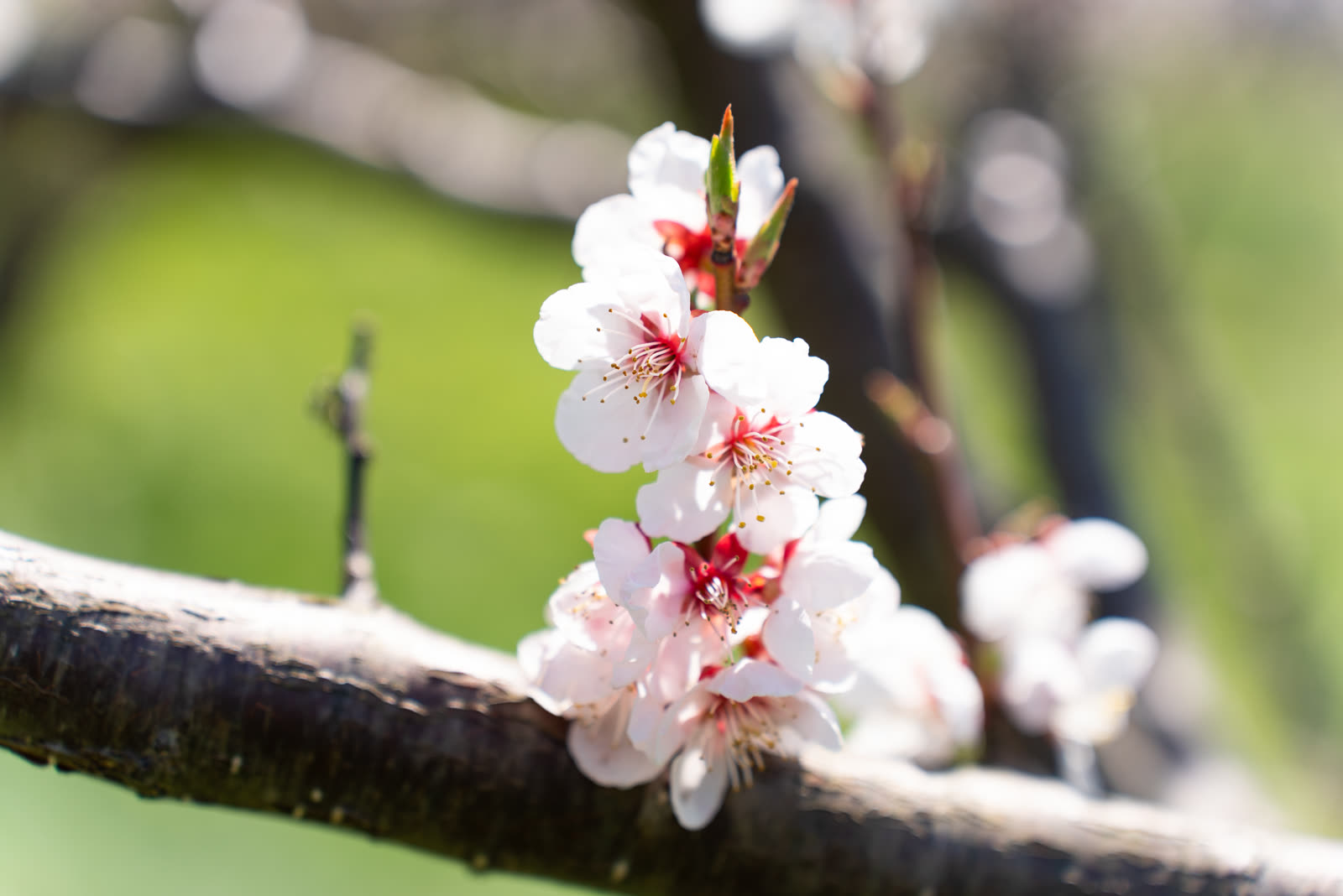
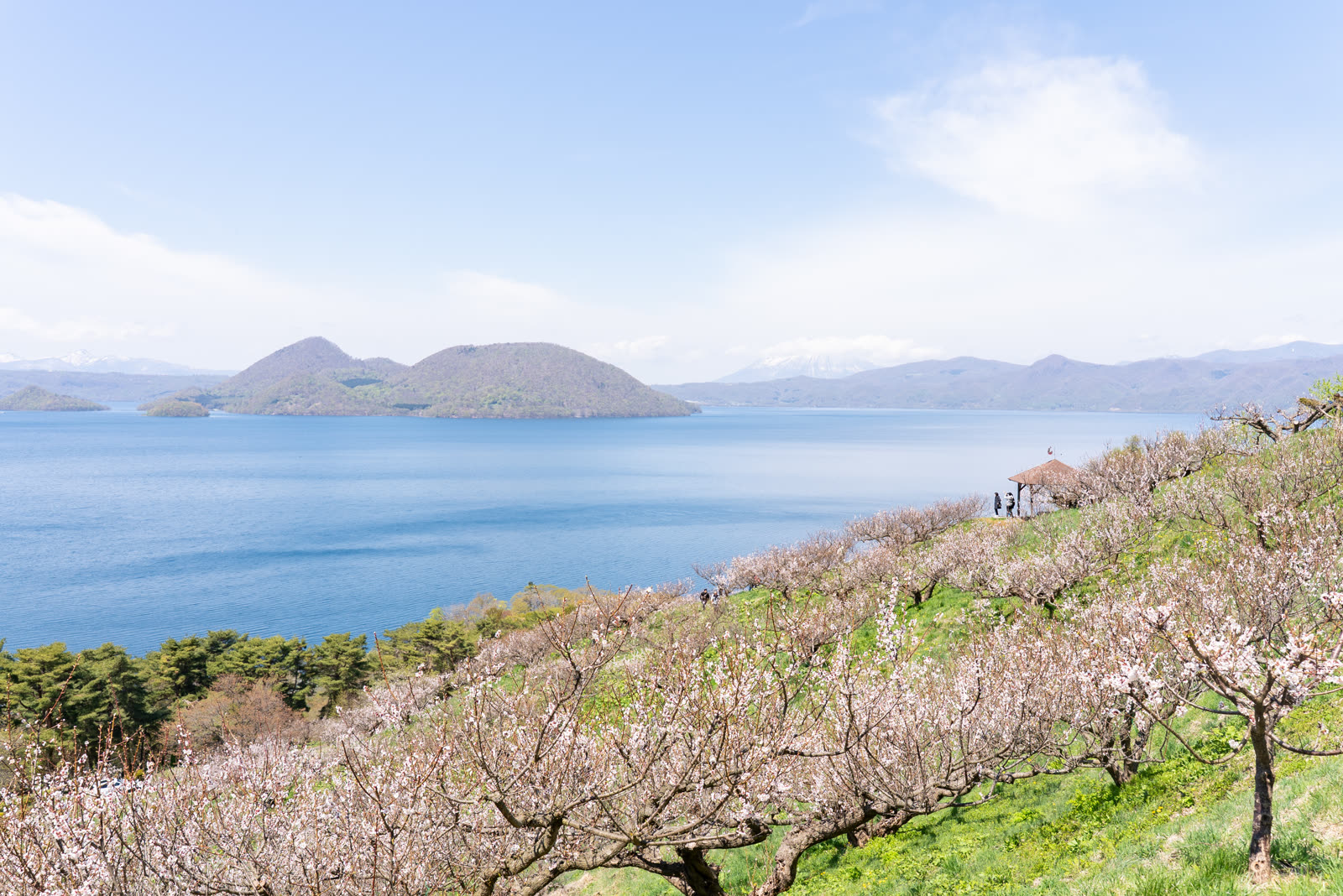
Sobetsu Park covers about 86,000 square meters, of which the plum grove takes up roughly 20,000. Planted here are around 300 Bungo plum trees. The trees line the slope, and the view opens up little by little as you climb the hill.
Unlike cherry blossoms, which fall all at once, plum trees open at their own pace, tree by tree. Even on the same day, a tree in full bloom may stand right beside one still in bud, so the pleasure of this grove is to walk slowly and compare the character of each tree one at a time.
There is no admission fee. Famous flower spots may bring to mind entry tickets or timed passes, but the Sobetsu Park plum grove is an unpretentious place that anyone is free to wander.
Best viewing is usually around mid-May
The plums are usually at their best around mid-May. If you are used to the Honshu sense of “plums bloom in February and March,” this may come as a surprise, but in Hokkaido spring itself arrives about a month later. In some years the crowds start to build around Golden Week, and the timing of the bloom shifts earlier or later depending on that year’s temperatures.
Pinpointing the exact peak is difficult, but plums often seem to have a longer flowering period than cherries, so even if your timing is slightly off, you can usually still find blossoms somewhere on the hill. That said, if you want to be sure of catching full bloom, please check the latest bloom status through official announcements from the town or the tourism association before finalizing your itinerary.
From late April into June, flowers follow one after another around Lake Toya—cherry blossoms, plums, daffodils and azaleas. We have summarized when each one blooms in our Lake Toya flower-viewing calendar, so please use it as a reference when choosing the timing of your trip.
A stunning view without the climb: the summit car park is the lookout
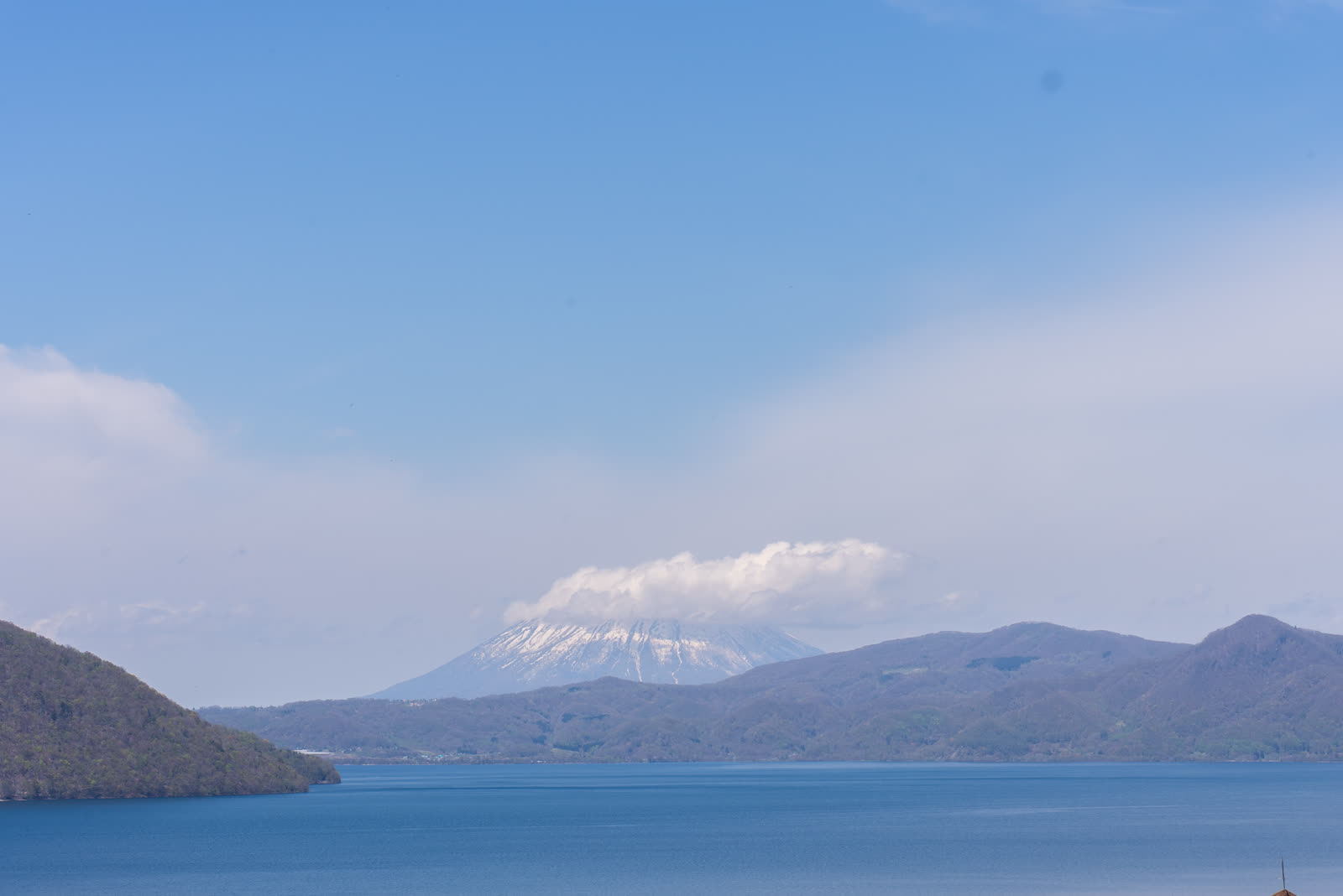
What sets the Sobetsu Park plum grove apart from other famous flower spots is that the summit car park doubles as the lookout. Park the car, take a few steps, and the view is already spread out before you. Because there is no long slope to climb, you can enjoy the scenery with peace of mind even with small children or with family members who find long walks difficult.
From here you can take in Lake Toya, Nakajima floating in the lake, Mount Yotei, Mount Usu and Showa-Shinzan—the mountains and lake that are the very symbols of Lake Toya, all within a single view. Plum blossoms in the foreground, the blue lake beyond, and the mountain ridgeline further back: this layered composition is something unique to this hill.
If you would like to actually visit Mount Usu and Showa-Shinzan after admiring them from afar, see our guide to Mount Usu and Showa-Shinzan as well. Comparing this view with the one from the Usuzan Ropeway brings the relationship between the volcanoes and the lake into three dimensions.
What to know before you go
- Admission is free. There is a car park at the summit, and it also serves as the lookout.
- From November to mid-April the road is closed for the winter. You cannot visit during the snowy season, so please come in spring or later.
- The wind sweeps across the top of the hill. Even on days that are warm at midday, it can feel much colder in the morning and evening or on cloudy days, so it is wise to bring an extra layer to throw on.
- Sobetsu is the neighboring town, just a short drive from the Lake Toya onsen area. The distance fits neatly into a half-day, making it easy to plan around—for example, the plum grove first thing in the morning, then back to the lakeside afterward.
The road circling Lake Toya is about 40 km, roughly an hour by car. To make the plum grove your starting point for a loop around the lake, see our Lake Toya lakeside drive guide; for a one-night, two-day trip chasing the flowers from plum to cherry blossoms, daffodils and azaleas, see our spring flower-viewing model course.
Kamonoya’s homes, your base for exploring the plum grove
Every Kamonoya property is a fully private, kitchen-equipped whole-house or whole-room rental. Because you never share space with other guests, you can enjoy a well-paced spring trip—setting out early to catch the quiet hours at the plum grove, walking the lakeside during the day, and relaxing in your own private space at night.
- For a family flower-viewing trip: Toya House (sleeps 8, from ¥24,000/night). A whole-house rental in the heart of the onsen town, well placed for reaching both the plum grove and the lakeside. BBQ is available too.
- For a small group traveling light: Lake Toya Building 2LDK (sleeps 6, from ¥11,000/night). A central apartment-style unit, just the right size as a base for touring the flowers by car.
- For a larger group or a three-generation spring trip: Toya Farmer’s House (sleeps 18, from ¥25,000/night). A large whole-house rental set in farmland, with a fireplace that keeps the chilly early-spring nights cozy. For larger groups, see our guide to group trips at Lake Toya as well.
You can see our other properties on the list of homes.
Booking directly through our official site is the best-value official rate, with no agency commission (best-rate guarantee). Check availability here.
FAQ
Q. When is the best time to see the Sobetsu Park plum grove?
Usually around mid-May. In some years the crowds start to build around Golden Week, and the timing of the bloom shifts earlier or later depending on that year’s temperatures. Because spring in Hokkaido comes about a month later than on Honshu, the charm of this place is that “after the plums and cherries have already finished on Honshu, you can meet the flowering season all over again.” Please check the latest bloom information before you set out.
Q. What about admission and parking?
Admission is free. There is a car park at the summit, and it serves directly as the lookout. Because you can take in Lake Toya, Nakajima, Mount Yotei, Mount Usu and Showa-Shinzan the moment you step out of the car, even those who find long walks difficult can enjoy the view. Note that from November to mid-April the road is closed for the winter.
Q. How far is the plum grove from the Lake Toya onsen town?
Sobetsu Park is in the neighboring town of Sobetsu, just a short drive from the Lake Toya onsen town. The distance fits comfortably into a half-day plan, so it is easy to arrange a trip with the plum grove in the morning and a lakeside stroll or the hand baths and foot baths of the onsen town in the afternoon. Kamonoya has several homes right in the center of the onsen town, so you can use them as your base.