A short trip beyond Lake Toya, in the city of Date, stands a historic temple with over 1,100 years of history: Usu Zenkoji. About 200-year-old cherry trees have taken root in its grounds, and the adjacent nature park holds some 1,000 cherry trees. When spring arrives, the quiet mountain temple is wrapped all at once in blossom. Kamonoya, which runs 11 whole-house rentals around Lake Toya, offers this guide to enjoying Usu Zenkoji in cherry-blossom season.
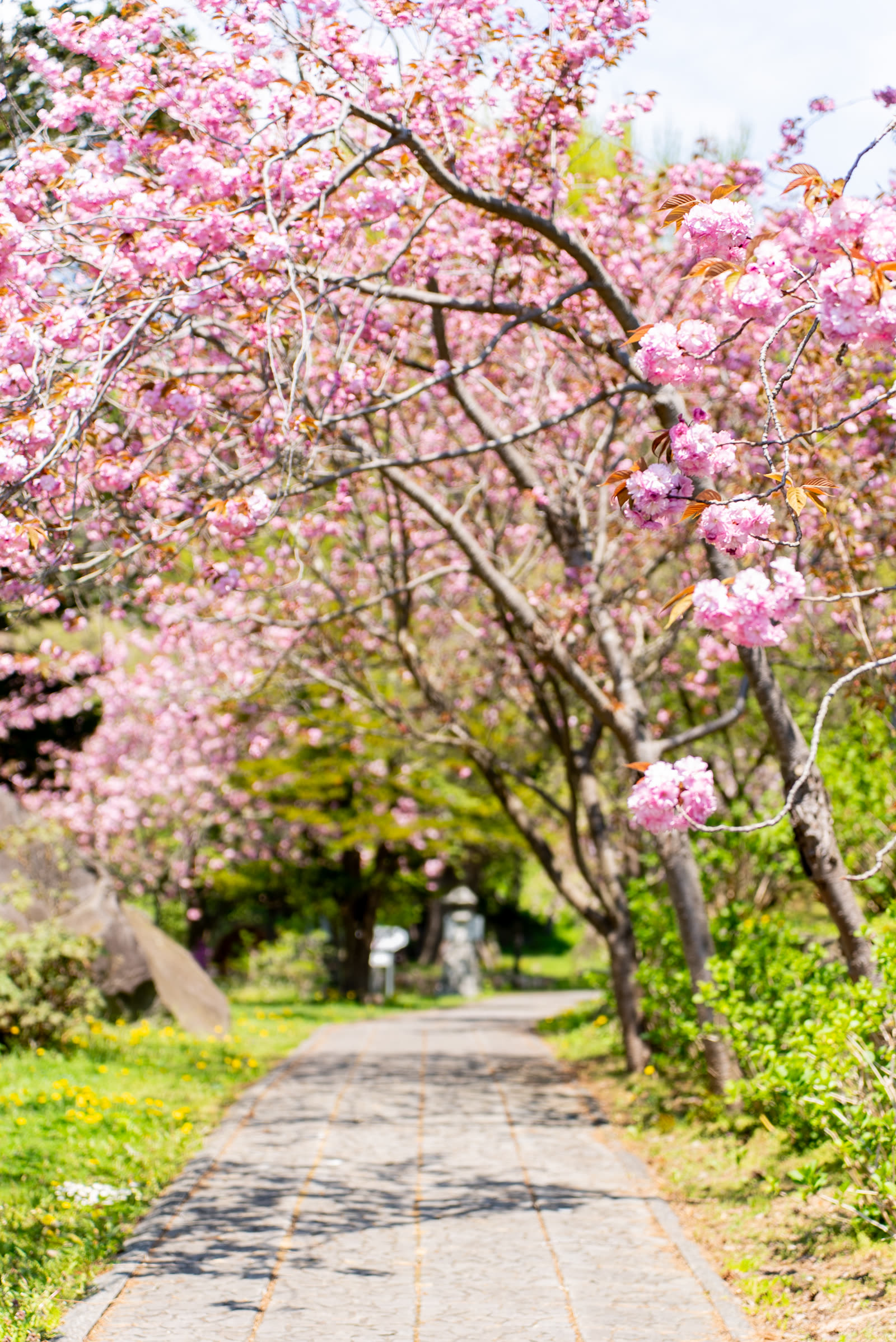
The azalea season that follows the cherry blossoms is covered separately in The Azaleas of Usu Zenkoji. Even at the same temple, a change of season brings an entirely different face.
A historic temple with over 1,100 years of history
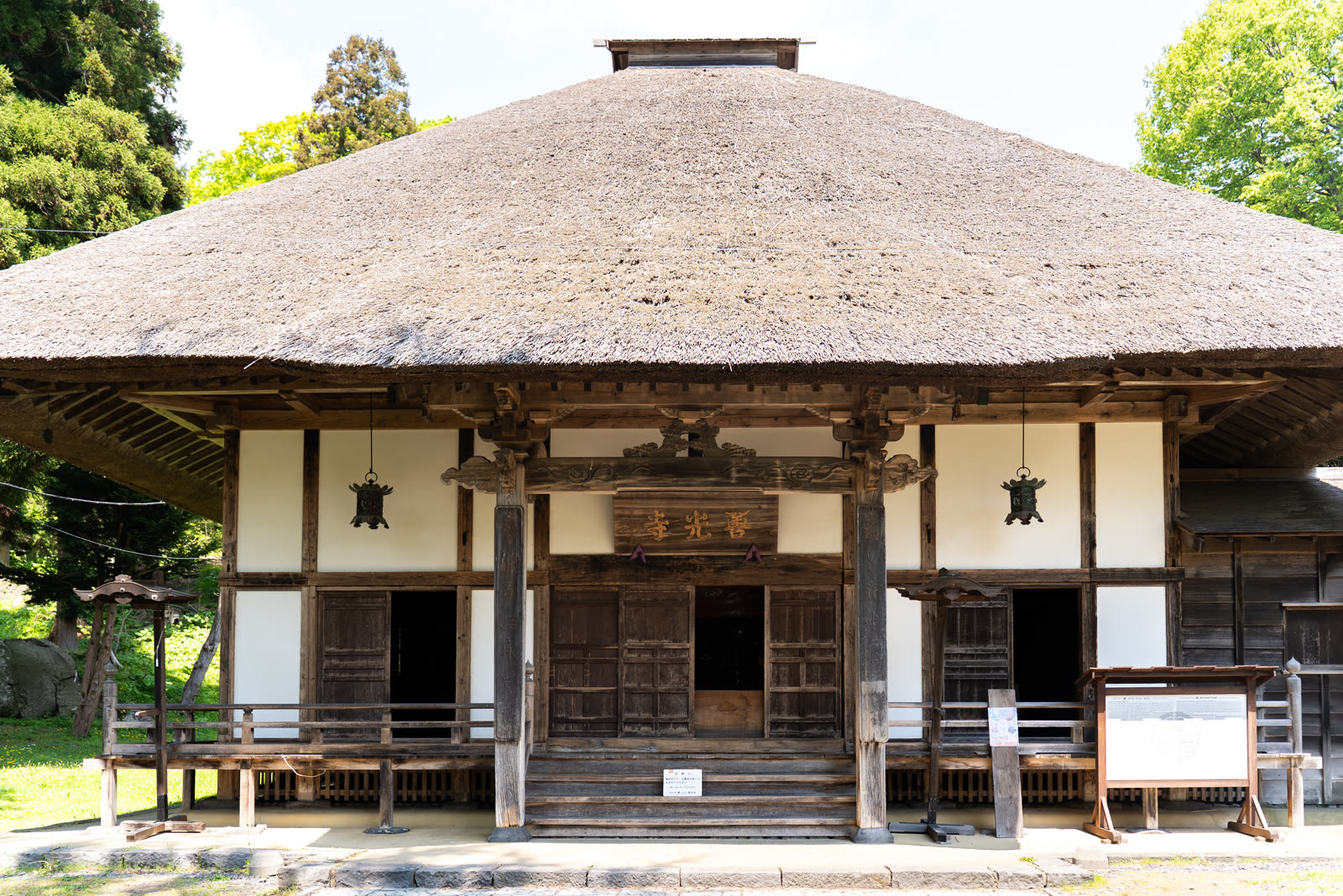
Usu Zenkoji is a temple that carries a long history into the present day. It is known as one of the three official temples the Edo-period shogunate established in Ezo (present-day Hokkaido), quietly telling the story of how faith took root in this northern land.
The thatched main hall in the grounds has a calm, unadorned presence. Far from the bustle of a tourist site, it is a place where time flows slowly, and even in cherry-blossom season a certain solemn air is preserved.
The temple remains an active place of worship. We would note at the outset that this is a place to walk quietly, mindful of proper etiquette when visiting. Details regarding visiting may also change, so please check the official information before you set out.
The star of the grounds: the roughly 200-year-old “stone-splitting cherry”
No account of the cherry blossoms at Usu Zenkoji would be complete without the Ishiwari-zakura, the “stone-splitting cherry,” in the temple grounds. It is a roughly 200-year-old Ezo mountain cherry (Prunus sargentii), designated a commemorative protected tree of Hokkaido.
True to its name, it has sent its roots down as if splitting the stone, growing its trunk over the years. The weight of 200 years comes through far more when you stand before the tree itself than in any photograph. Unlike the pale Somei-Yoshino, the Ezo mountain cherry has a slightly deeper flower color and characteristically blooms together with its young leaves. Set against the thatched main hall, the reddish blossoms spreading across its branches make a scene you can see only at this temple.
The spot in front of the stone-splitting cherry is also where many visitors stop. When taking photographs, please be considerate of those waiting their turn behind you and of those quietly at worship.
Around 1,000 cherry trees, and a “temple of flowers” where the blooms never end
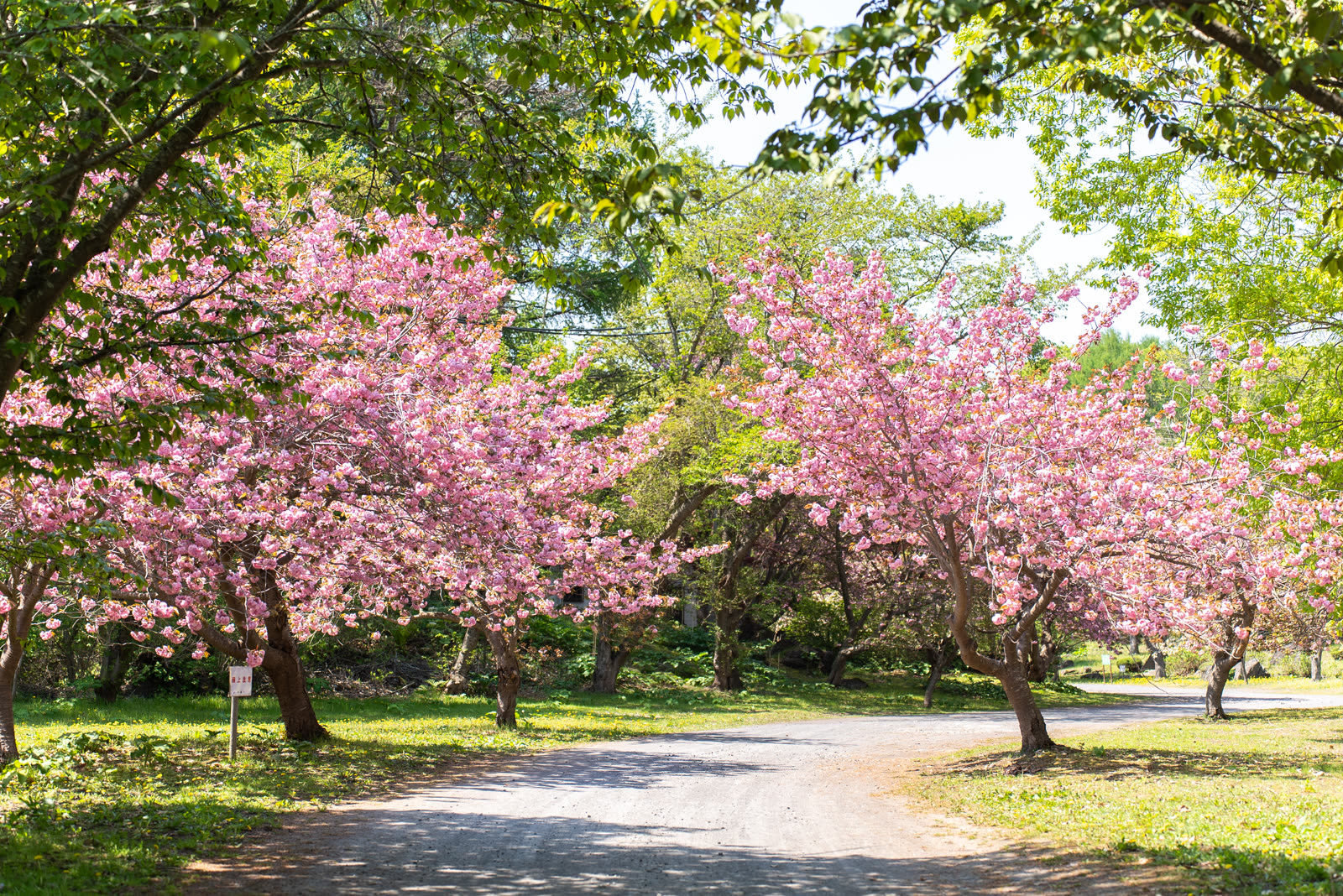
Zenkoji Nature Park, adjoining the temple, is planted with around 1,000 cherry trees. With many varieties—Somei-Yoshino, mountain cherry, weeping cherry and Ezo mountain cherry among them—each blooming a little apart from the others, the flowers can be enjoyed over a long stretch within the park. If the stone-splitting cherry in the grounds is “a place to stand face to face with a single tree,” the nature park is “a place to walk among the blossoms.”
The cherry blossoms are usually at their best from late April to around mid-May, while the adjoining nature park comes a little later, usually from early to late May. The timing shifts from year to year and with the temperature, so please check the latest bloom status from the official announcements of the municipality or tourism association before you finalize your travel dates.
Usu Zenkoji is called a “temple of flowers” because the blooms never cease even after the cherry blossoms fall. Cherry blossoms give way to azaleas, then peonies, and then hydrangeas, the flowers changing over with the seasons. The azaleas that follow the cherry blossoms are usually at their best from mid- to late May. Visit at the moment the two are changing over and the impression of the grounds is transformed entirely. For details, see The Azaleas of Usu Zenkoji.
Access, and how to build it into a Lake Toya trip
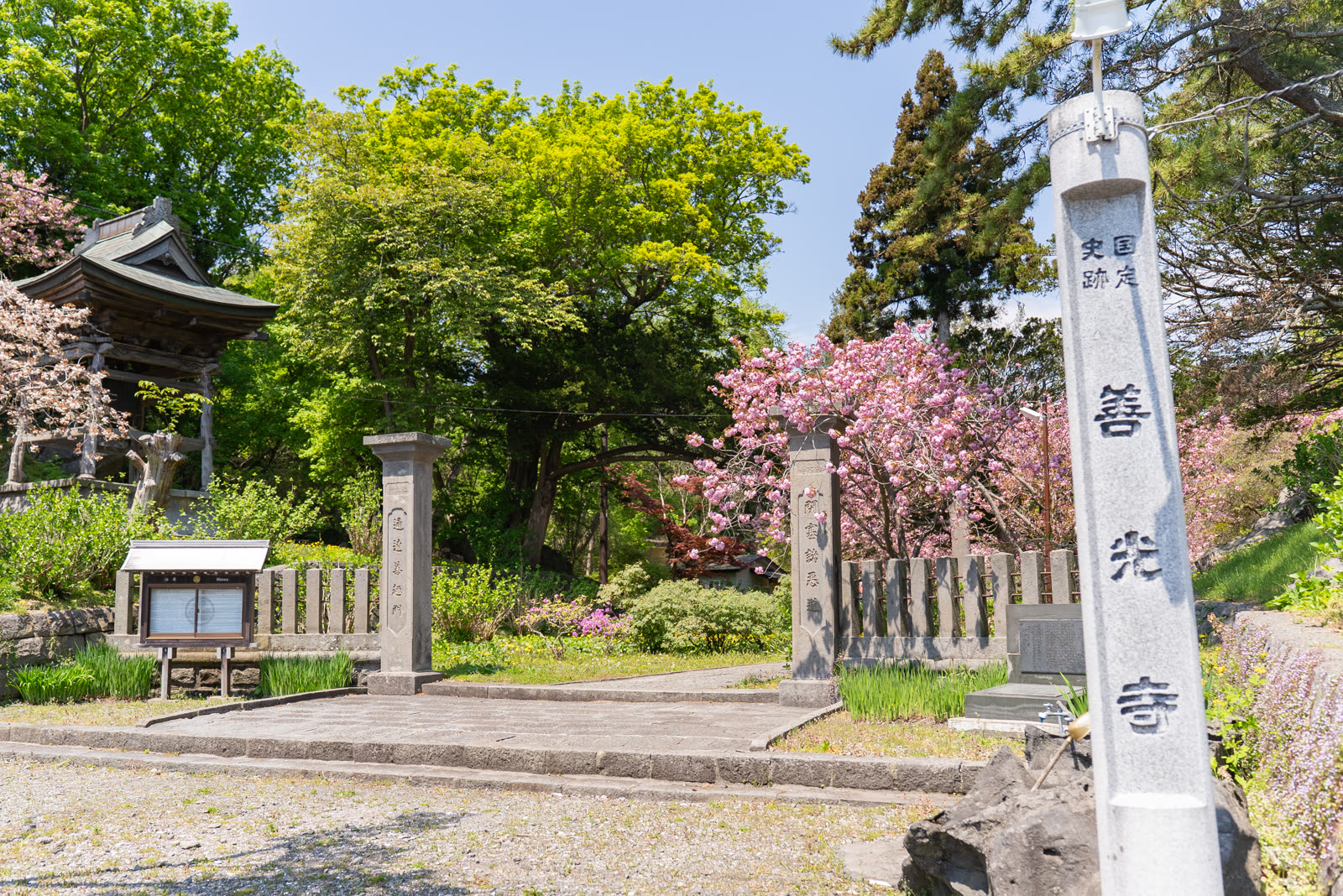
Usu Zenkoji is about 20 minutes by car from the Date IC or Abuta-Toyako IC on the Do-o Expressway. If you are coming by public transport, it is about a 25-minute walk from JR Usu Station. It is close enough to visit in half a day while staying at Lake Toya.
From late April into June, the Lake Toya area sees a succession of flowers—cherry, plum, daffodils and azaleas. Around the same time, the plum grove at Sobetsu Park in the neighboring town of Sobetsu reaches its peak, and daffodils spread across Daffodil Hill in Toyako Town. To plan a trip around the flowers, our spring flower-viewing model course and flower bloom calendar are handy. For the lakeside cherry blossoms themselves, see Cherry Blossoms and Spring Highlights at Lake Toya, and for spring in general we have gathered everything in our Spring Lake Toya guide.
Kamonoya’s lodgings as a base for touring the temple of flowers
Every Kamonoya lodging is a whole-house or whole-unit rental with a full kitchen. Since you never share space with other guests, you can use your time freely—visiting the temple in the quiet of the morning and relaxing by the lake in the afternoon.
- For a family or group spring trip: Toya INN-West (up to 9 guests, from ¥25,000/night). A whole-house rental in the heart of the onsen town, with a wood-burning stove—so even the chilly nights of cherry-blossom season stay comfortable.
- For a couple or small group: Toya Terraced House (up to 4 guests, from ¥11,000/night). A calm, whole-unit rental in the town center where you can carry the afterglow of a quiet temple visit home with you.
- If you are after quiet: Cloud9 Toya (up to 11 guests, from ¥27,000/night). A hideaway whole-house rental away from the bustle, with a wood-burning stove and a BBQ to enjoy.
You can view our other properties from the list of facilities.
Booking directly through our official site is the best-value official rate, with no agency commission (best-rate guarantee). Check availability here
FAQ
Q. When are the cherry blossoms at Usu Zenkoji at their best?
The cherry blossoms in the temple grounds are usually at their best from late April to around mid-May, and the adjoining Zenkoji Nature Park from early to late May. The nature park has around 1,000 cherry trees of many varieties—Somei-Yoshino, mountain cherry, weeping cherry and Ezo mountain cherry among them—so the blooming period spans a wide range. The timing shifts with the temperature, so please check the latest bloom information before you set out.
Q. What kind of cherry tree is the stone-splitting cherry?
It is a roughly 200-year-old Ezo mountain cherry in the grounds of Usu Zenkoji, designated a commemorative protected tree of Hokkaido. It takes its name from the way it grew, sending its roots down as if splitting the stone. The Ezo mountain cherry blooms together with its young leaves and has a slightly deeper flower color than the Somei-Yoshino, which makes its pairing with the thatched main hall especially striking.
Q. Can I make it a day trip while staying at Lake Toya?
Yes, it makes an easy day trip. It is about 20 minutes by car from the Date IC or Abuta-Toyako IC on the Do-o Expressway, and about a 25-minute walk from JR Usu Station. The distance makes it easy to build a half-day plan—Zenkoji in the morning and the lakeside or onsen town in the afternoon—while based at Lake Toya. Every Kamonoya lodging is a whole-house or whole-unit rental, so you can enjoy a stay unbound by the clock.